
A properly designed roof ventilation system plays a crucial role in protecting your home, improving energy efficiency, and extending the life of your roofing materials. For residential homeowners, installing the right ventilation system helps regulate attic temperature, reduce moisture buildup, and prevent costly structural damage. This guide explains everything you need to know about Roof Ventilation System Installation for Residential Homes and why it is an essential part of a healthy roofing system.
Homeowners working with a trusted Roofing Contractor Albany NY often discover that ventilation issues are the hidden cause behind high energy bills, ice dams, mold growth, and premature roof failure. Proper ventilation ensures balanced airflow throughout the attic space, keeping your home comfortable year-round.
What Is a Roof Ventilation System?
A roof ventilation system is designed to allow fresh air to enter the attic while pushing hot, moist air out. This continuous airflow helps regulate temperature and moisture levels, protecting roofing materials and interior structures. Residential roof ventilation typically includes intake vents, exhaust vents, or a combination of both.
When paired with professional Residential Roofing Service, a properly installed ventilation system significantly improves indoor comfort and reduces strain on heating and cooling systems.
Why Roof Ventilation Is Essential for Homes
Many homeowners underestimate the importance of roof ventilation until problems arise. Poor ventilation traps heat and moisture inside the attic, which can lead to warped decking, damaged shingles, and insulation breakdown. Over time, this increases the likelihood of repairs and shortens roof lifespan.
In colder climates, improper ventilation contributes to ice dam formation, while in warmer months, trapped heat causes excessive indoor temperatures. Homes that rely on proper airflow experience fewer issues related to Storm Damage Roof Repair and moisture-related deterioration.
Types of Roof Ventilation Systems for Residential Homes
Choosing the right ventilation system depends on your roof design, attic size, and local climate. The most common residential roof ventilation options include:
- Ridge Vents – Installed along the roof peak for continuous exhaust airflow
- Soffit Vents – Intake vents placed under eaves to draw in cool air
- Gable Vents – Wall-mounted vents that promote cross ventilation
- Roof Turbines – Wind-powered exhaust vents that improve airflow
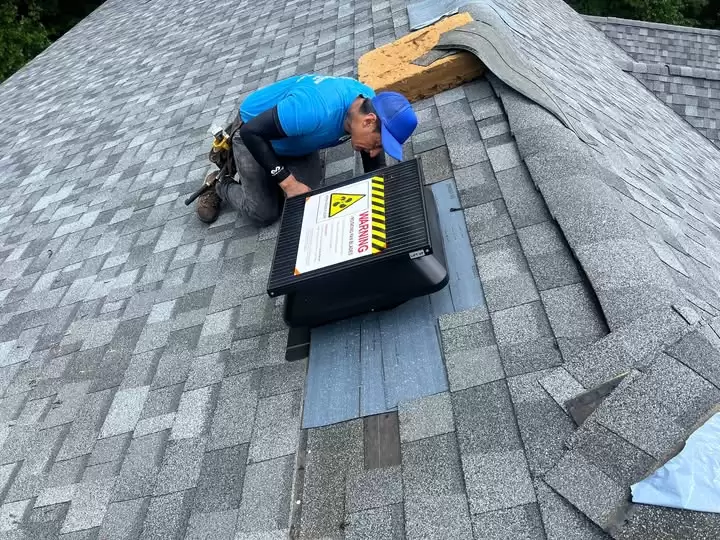
- Powered Attic Fans – Electrically driven systems for enhanced ventilation
Professional installers assess your home’s structure to ensure balanced intake and exhaust, preventing pressure issues that reduce efficiency.
💡 Expert Tip: Balanced Airflow Matters
Effective roof ventilation depends on balance. Always match intake vent capacity with exhaust vents to avoid negative pressure that can pull conditioned air out of your living space.
Roof Ventilation System Installation Process
Installing a residential roof ventilation system involves careful planning and precise execution. Professionals begin by evaluating attic size, insulation levels, and existing airflow patterns. This assessment ensures the ventilation system is properly sized for your home.
The installation process typically includes cutting vent openings, sealing penetrations, and integrating vents seamlessly with existing roofing materials. Skilled installers also ensure compatibility with siding and chimney structures, reducing the risk of future leaks that could require Chimney Repair Albany NY.
Roof Ventilation vs Poorly Ventilated Homes
How Ventilation Supports Other Exterior Systems
Roof ventilation works alongside other exterior systems to protect your home. Proper airflow reduces heat buildup that can damage siding and attic framing. Homeowners coordinating roofing upgrades with a Siding Contractor in Albany, NY often see improved overall performance and reduced maintenance needs.
Frequently Asked Questions (FAQ)
Q: How do I know if my home needs better roof ventilation?
A: Signs include high energy bills, uneven indoor temperatures, ice dams, mold growth, or premature roof damage.
Q: Can roof ventilation reduce cooling costs?
A: Yes, proper ventilation lowers attic temperatures, reducing strain on air conditioning systems.
Q: Is roof ventilation required for all homes?
A: Most residential homes benefit from ventilation, especially those with attic spaces and asphalt or shingle roofs.
Q: Can ventilation be added to an existing roof?
A: Yes, ventilation systems can be retrofitted during roof repairs or inspections.
Q: Does roof ventilation prevent storm-related damage?
A: While it doesn’t stop storms, proper ventilation reduces moisture buildup after severe weather events.
Improve Comfort and Protect Your Roof
A professionally installed roof ventilation system improves energy efficiency, prevents moisture damage, and extends roof lifespan. Center Construction LLC provides expert residential ventilation solutions throughout Albany, NY, ensuring your home stays protected year-round.


