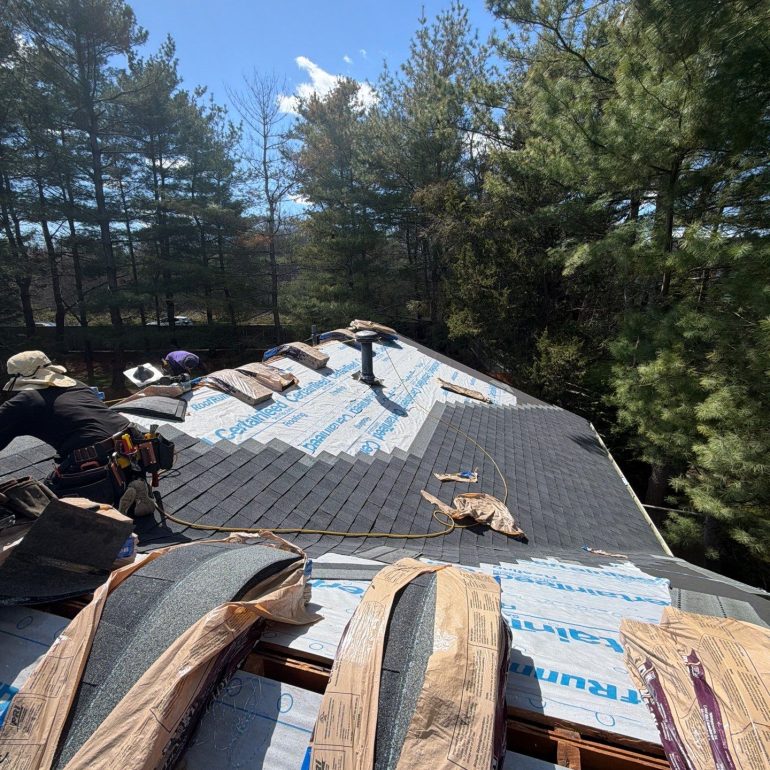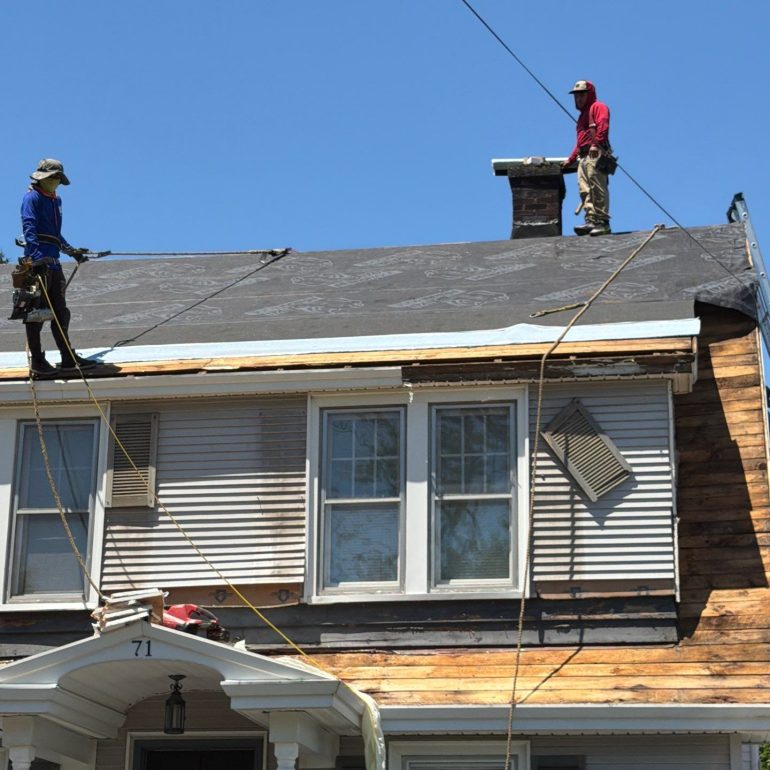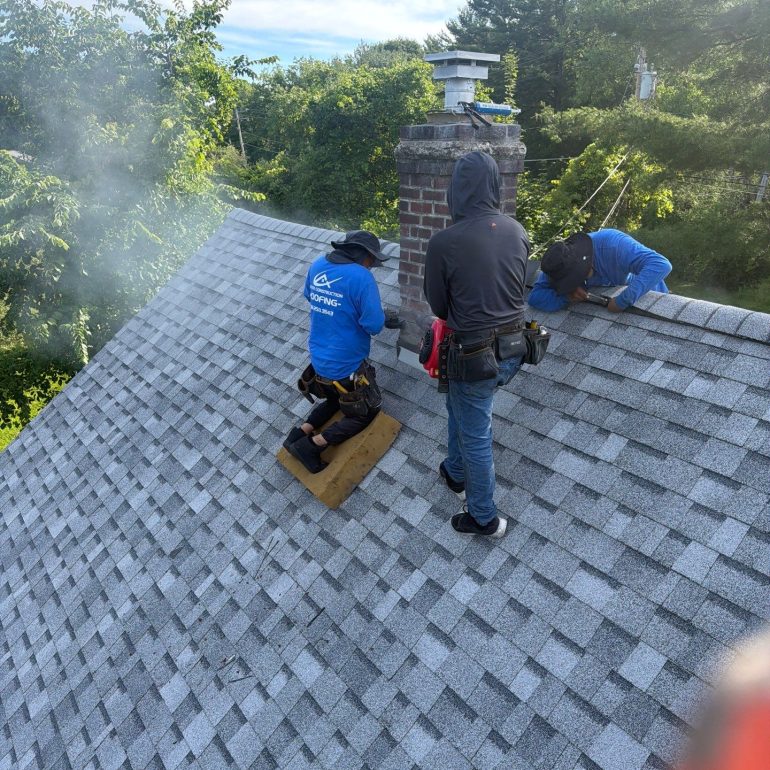

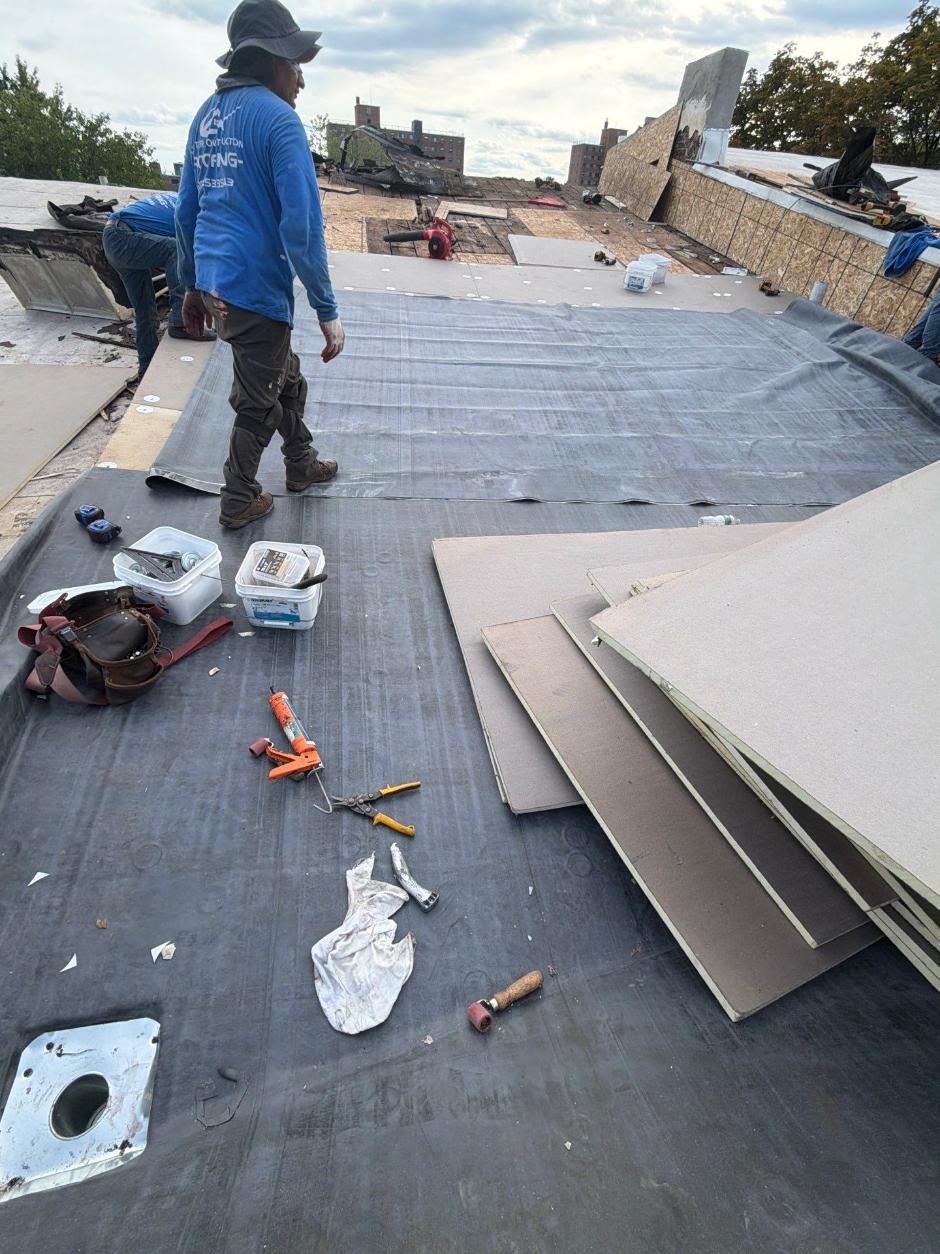
Commercial low-slope roofs require careful preparation before the final roofing membrane is installed. The image shows a professional roofing crew working on a large low-slope roof where sections of the underlying surface have been prepared and a dark membrane is being positioned across the roof. Materials, tools, and membrane components are visible throughout the work area, illustrating the importance of organized installation. Proper commercial flat roof membrane preparation helps create a suitable foundation for the roofing system while addressing transitions, edges, seams, and other critical areas. At Roofing Company, detailed preparation is an important part of building a reliable commercial roofing system.
Why Commercial Flat Roof Membrane Preparation Matters
A roofing membrane performs best when the surface beneath it has been properly prepared. On a commercial low-slope roof, the installation area may include large open sections, parapet walls, drains, penetrations, equipment, and changes in elevation.
Before the membrane is fully installed, roofing professionals need to evaluate the existing surface and organize the work area. Loose materials, unsuitable surfaces, and areas requiring repair should be addressed before the membrane installation progresses.
Proper preparation can also help installers maintain consistent membrane placement across a large roof area. This is particularly important on commercial properties where the roof can cover a substantial footprint.
Preparing the Roof Surface for Membrane Installation
The first stages of commercial flat roof membrane preparation involve creating an appropriate surface for the roofing materials.
Depending on the existing roofing assembly, preparation may involve removing unsuitable materials, repairing sections of the substrate, cleaning the work area, and confirming that the surface is ready for the selected roofing system.
The image shows a broad prepared roof area with membrane material being positioned across the surface. Keeping the work area organized allows the crew to manage materials and installation tools while progressing systematically across the roof.
The exact preparation process depends on the existing roof assembly and the membrane system being installed.
Paying Attention to Parapet Walls and Roof Edges
The roof surface is only one part of a commercial roofing system. Perimeter edges and parapet walls also require careful attention because the membrane must transition properly from the horizontal roof surface to surrounding vertical surfaces.
In the image, the membrane installation extends toward raised wall sections along the roof perimeter. These transition areas need appropriate detailing so the roofing system remains continuous.
Professional Commercial Roofing installation considers these edge conditions as part of the complete roof assembly rather than treating the main roof field separately from its perimeter details.
Proper detailing around edges can also help reduce areas where water could enter beneath the roofing system.
Managing Membrane Seams During Installation
Large commercial roofs commonly require multiple sections of membrane to cover the entire surface. Where membrane sections meet, seams need to be properly formed and secured according to the requirements of the roofing system.
The image shows membrane material being laid across a large roof area before the installation is fully completed. As the work progresses, individual sections must be aligned carefully so the finished system has consistent transitions.
Seam preparation is an important part of professional roofing work because improperly handled joints can create potential points of moisture intrusion.
The exact bonding or welding method depends on the specific membrane material selected for the project.
Working Around Roof Penetrations and Drainage Points
Commercial roofs often contain penetrations and drainage components that interrupt the main membrane field. These may include vents, pipes, drains, equipment supports, and other rooftop components.
Each transition requires appropriate detailing so that the membrane remains properly integrated with the surrounding roofing assembly.
Drainage is especially important on low-slope roofs. Although these roofs may appear flat, they are generally designed to direct water toward designated drainage points.
During Roof Installation, contractors need to consider how membrane placement interacts with existing drains and other rooftop features. Keeping these areas properly detailed helps maintain the intended performance of the roofing system.
Keeping the Installation Area Organized
The image provides a clear view of an active commercial roofing project, with tools, membrane materials, and installation components arranged across the work area. Organization is particularly important on large roofs because crews may be working across extensive surfaces while handling heavy or flexible roofing materials.
A controlled work area can make it easier for installers to locate tools, position membrane sections, and maintain a consistent installation sequence.
Weather conditions can also influence how roofing materials are handled. Professional crews need to account for site conditions while determining when and how different installation stages should proceed.
How Proper Preparation Supports Long-Term Roof Performance
A roofing membrane is designed to provide a protective layer over the building, but its performance depends on the complete roofing assembly and quality of installation.
Preparation helps ensure that the membrane is installed over an appropriate surface and that important transitions are addressed before the project is completed.
For commercial property owners, this means the installation process should not be viewed simply as placing a new layer over the roof. Surface preparation, perimeter detailing, seams, drainage, penetrations, and material handling are all connected parts of the project.
At Center Construction Roofing, careful planning of these stages helps create a more coordinated commercial roofing installation.
When Professional Membrane Installation Is Appropriate
Large low-slope roofs can involve complicated layouts and numerous details that are difficult to evaluate from ground level. Professional assessment can help determine the condition of the existing roof and the preparation required for a new membrane system.
The appropriate roofing approach depends on factors such as the existing roof assembly, substrate condition, drainage configuration, building use, and selected membrane.
A professional roofing contractor can evaluate these conditions before installation and establish a project plan based on the property’s specific requirements.
Building a Complete Commercial Roofing System
A membrane is one component of a larger roofing system. Its performance depends on how the membrane interacts with the substrate, insulation, drainage, perimeter details, penetrations, and other roofing components.
The installation shown in the image represents the hands-on stage of a larger process. Once the roof surface has been properly prepared, the membrane can be positioned and detailed across the roof according to the requirements of the selected system.
For commercial property owners planning a low-slope roof project, understanding commercial flat roof membrane preparation can make it easier to evaluate the different stages involved before the finished roofing surface is completed.
FAQ
What is commercial flat roof membrane preparation?
It is the process of preparing a commercial low-slope roof surface and its surrounding details before installing the roofing membrane. This may include substrate preparation, cleaning, repairs, edge detailing, and planning around penetrations and drainage points.
Why does the roof surface need to be prepared before membrane installation?
A properly prepared surface provides a suitable foundation for the membrane and allows potential problems to be addressed before the roofing system is completed.
Are parapet walls part of membrane preparation?
Yes. The membrane often needs to transition from the main roof surface to surrounding parapet walls or other vertical surfaces, making perimeter detailing an important part of installation.
How are membrane seams handled on commercial roofs?
The method depends on the specific membrane system. Roofing professionals use the manufacturer’s required installation technique to create appropriate connections between membrane sections.
Does a flat commercial roof need drainage planning?
Yes. Low-slope roofs are designed with drainage considerations in mind. Membrane installation should coordinate with drains and other drainage components so water can move toward designated outlets.
How long does commercial membrane installation take?
Project duration varies based on roof size, existing conditions, selected roofing system, weather, access, and the amount of preparation required. A contractor can provide a project-specific schedule after evaluating the roof.