

If your shingles are worn out and your siding is cracked, faded, or soft in spots, you have probably wondered whether it makes sense to replace roof and siding at the same time. For many homes in the Capital Region, the answer is yes. Doing both projects together protects the house as one complete weather barrier, cuts down on repeated disruption, and often saves money on labor, disposal, and trim work. At Center Construction Roofing, we regularly plan combined exterior projects so the roof, walls, and flashing work together instead of against each other.
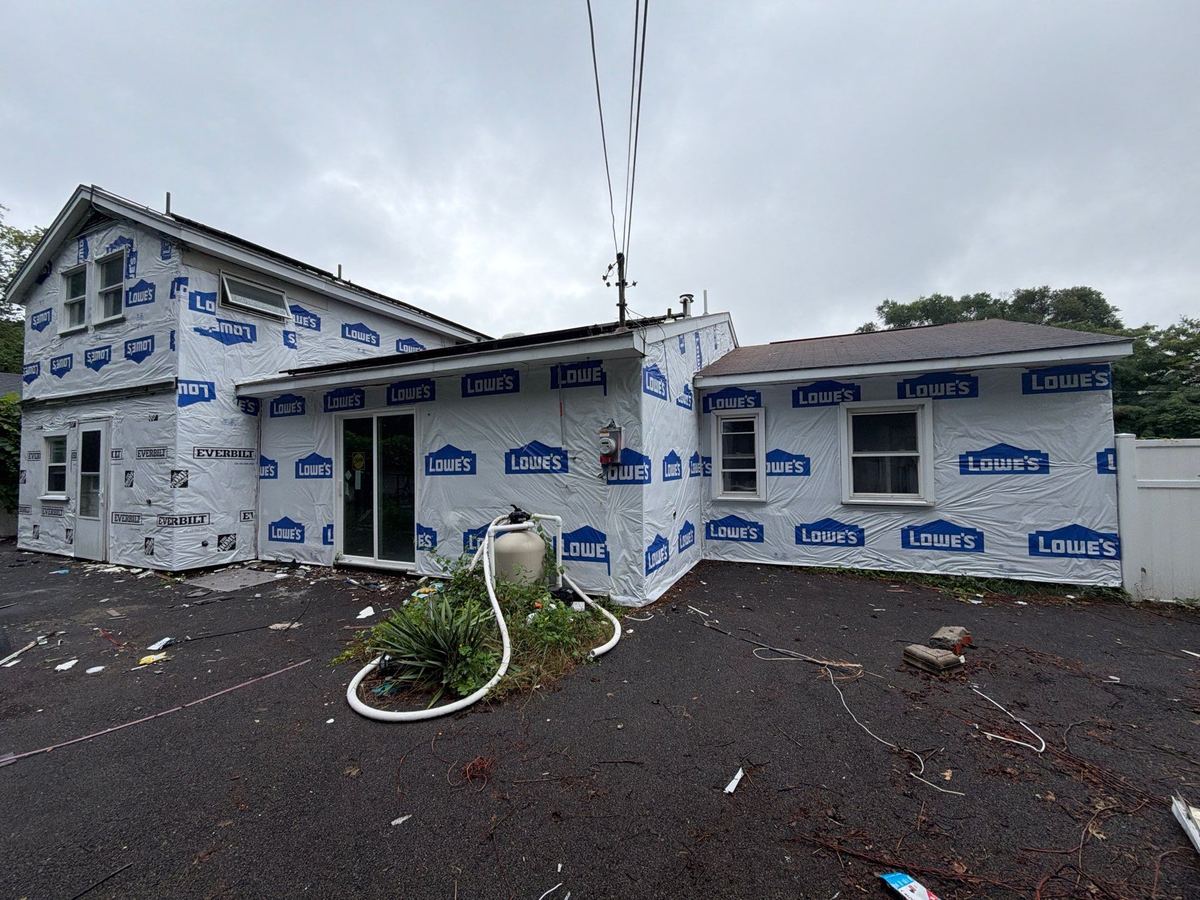
This guide explains when a combined project is the smart move, what happens between tear-off and new cladding, and why the house wrap stage you see in the photo below is one of the most important steps of the whole job.
Why Replace Roof and Siding at the Same Time?
Your roof and siding are not two separate systems. Water that runs off the roof lands on the walls, and the joints where roof meets wall are some of the most common leak points on any house. When the two jobs are done years apart, the second crew usually has to work around, cut into, or patch the first crew’s flashing. Doing both together lets one team handle every transition properly from the start.
One Continuous Weather Barrier
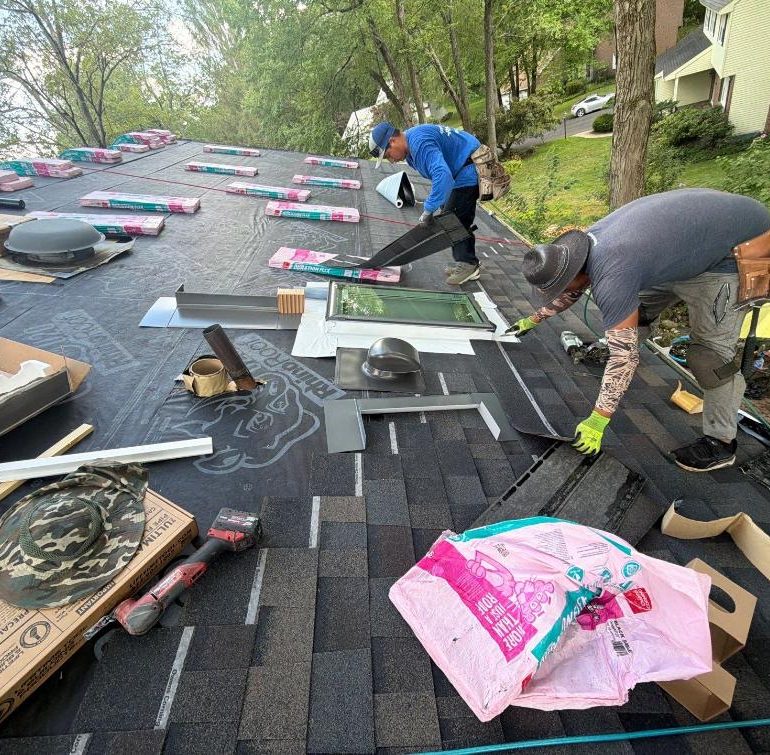
Step flashing, kick-out flashing, and drip edge all tie the roof into the wall. When the siding is off, these pieces can be installed correctly behind the wall weather barrier instead of being caulked over from the outside. A properly lapped system sheds water by gravity, which is far more reliable than relying on sealant that breaks down in a few seasons.
Lower Overall Cost
Combining projects typically means one dumpster, one round of equipment setup, one permit process where required, and one crew mobilization. Trim, fascia, soffit, and gutter work only has to be done once. While every home is different, homeowners usually spend less on a combined project than on two separate projects a few years apart.
Matching Colors and a Finished Look
Choosing shingles and siding together makes it easier to create a coordinated exterior. You can compare color samples side by side and avoid the situation where a brand-new roof clashes with ten-year-old siding. It also lets trim, fascia, and gutter colors be chosen once for the whole house.
Less Disruption to Your Household
Exterior work brings noise, ladders, debris, and limited driveway access. Doing it once means your family lives through one construction period instead of two.
Signs Your Home Needs Both a New Roof and New Siding
A combined project makes the most sense when both systems are near the end of their service life. Look for these warning signs:
- Roof: curling or missing shingles, granules collecting in gutters, sagging areas, recurring leaks, or a roof that is 20+ years old.
- Siding: cracked, warped, or loose panels, rot at the bottom courses, peeling paint inside the home, or mold and staining on exterior walls.
- Both: water stains near the ceiling line, damaged trim where the roof meets the wall, or soft sheathing found during an inspection.
If only one system is failing, it may make more sense to replace just that one. Our article on roof vs. siding: when to repair or replace walks through that decision in more detail.
What Happens During a Combined Roof and Siding Replacement
Every project is planned around the home, but most combined jobs follow a similar order.
1. Inspection and Planning
We inspect the roof deck, wall sheathing, flashing, windows, and gutters. This is when we estimate how much rotten wood may need replacement and choose roofing and siding products that work together.
2. Roof Tear-Off and New Roof Installation
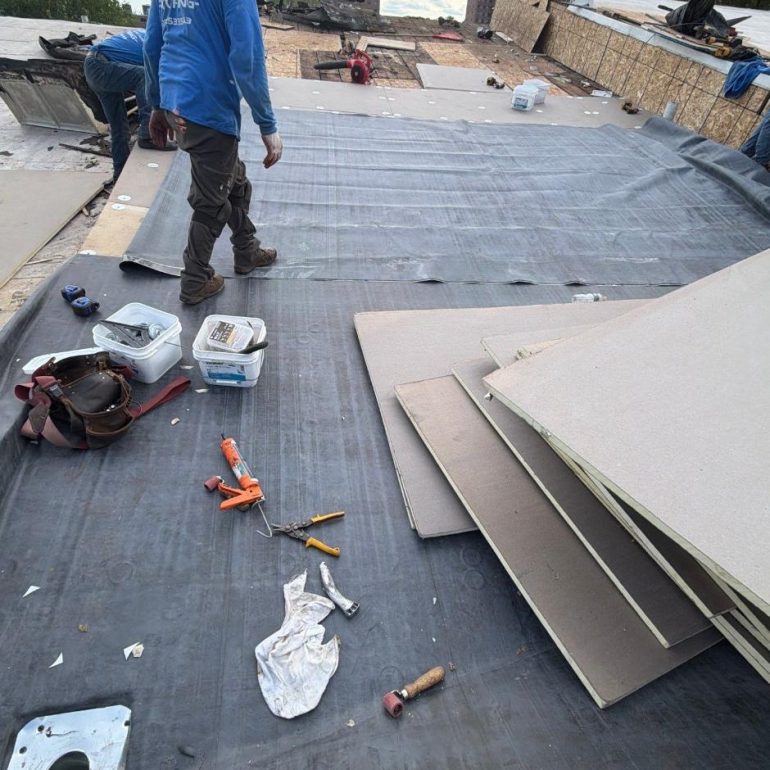
Roofing usually comes first so water is managed from the top down. Old shingles are removed, damaged decking is replaced, and new underlayment, ice and water barrier, drip edge, flashing, and shingles are installed. Learn more about our roofing replacement services.
3. Siding Removal and Wall Inspection
Once the old siding is off, the wall sheathing is fully exposed. Any rot, insect damage, or water staining is repaired before anything new goes on. This is an advantage of removing siding instead of covering over it, because hidden damage becomes visible.
4. House Wrap Installation
Next, the walls are wrapped in a water-resistive barrier, commonly called house wrap. This is the stage shown in the photo above. House wrap stops liquid water that gets behind siding while still letting water vapor escape from inside the wall, which helps prevent mold and rot.
5. Window, Door, and Roof-to-Wall Flashing
Flashing tape and metal flashing are installed around openings and at every roof-to-wall intersection. Done correctly, each layer overlaps the one below it so water always runs outward.
6. New Siding, Trim, and Gutters
Finally, the new siding, corner posts, trim, soffit, and fascia are installed, followed by gutters and downspouts. If you are considering siding options, explore our siding replacement services.
Why House Wrap Matters When You Replace Roof and Siding at the Same Time
Siding by itself is not waterproof. Wind-driven rain gets behind every type of cladding, whether vinyl, fiber cement, or wood. The house wrap is the layer that actually keeps water away from your wall framing.
Correct Lapping Direction
House wrap should be installed from the bottom of the wall upward so each higher row overlaps the row below, similar to how shingles overlap on a roof. Seams are taped, and the wrap is tucked under roof flashing or lapped correctly over it depending on the detail.
Proper Integration at the Roof Line
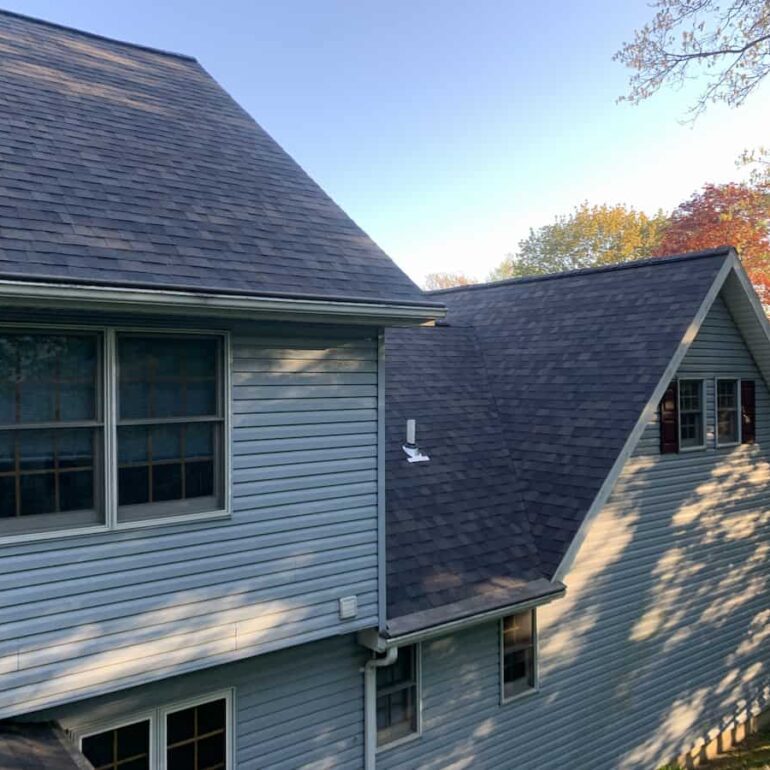
Where a lower roof meets a taller wall, as seen on the two-story section of the home in the photo, step flashing must sit behind the house wrap, and a kick-out flashing should divert water away from the wall at the bottom of the roof edge. Missing kick-out flashing is one of the most common causes of hidden wall rot we find.
Limited Exposure Time
Most house wraps are designed to be covered within a set period, because long sun exposure can weaken them. A well-scheduled combined project keeps that exposure window short.
Combined Project vs. Separate Projects
| Factor | Roof and Siding Together | Separate Projects |
|---|---|---|
| Flashing quality | Installed correctly behind wall barrier | Often patched or caulked later |
| Labor and setup costs | One mobilization | Two mobilizations |
| Disposal | Shared dumpster | Two rounds of disposal |
| Design coordination | Colors chosen together | Harder to match later |
| Upfront cost | Higher one-time investment | Cost spread over time |
How to Plan Your Budget
A combined project is a larger single investment, so planning ahead helps. Get a detailed written estimate that separates roofing, siding, wood repair allowances, and trim. Ask how unexpected rot will be priced. If spreading payments out would help, ask about financing options during your estimate.
Get a Combined Roof and Siding Estimate
Center Construction Roofing is a Owens Corning Preferred contractor serving Albany, Schenectady, Saratoga, and surrounding communities in New York and southern Vermont. We handle roofing, siding, gutters, and flashing under one team, so every part of your exterior is built to work together. Call (518) 520-4511 to schedule your free estimate.
Frequently Asked Questions
Is it cheaper to replace roof and siding at the same time?
In most cases, yes. Combining the work reduces repeated costs such as setup, equipment, disposal, and trim or gutter work. The total upfront price is higher than one project alone, but the combined cost is usually lower than doing both projects separately.
Should the roof or siding be replaced first?
The roof is usually replaced first. Working from the top down protects the home from water and allows roof-to-wall flashing to be installed before the siding covers it.
How long does a combined roof and siding project take?
For an average single-family home, a combined project often takes one to three weeks depending on home size, weather, material choice, and how much wood repair is needed.
Do I need house wrap under new siding?
Yes. Siding alone does not stop all water. A properly installed house wrap or other water-resistive barrier protects the wall sheathing and framing from moisture that gets behind the siding.
Can I stay in my home during a roof and siding replacement?
Yes. Most homeowners stay in their homes during the project. Expect noise during working hours and limited access to some parts of the yard and driveway.
What happens if rot is found under the old siding?
Damaged sheathing or framing should be repaired before new house wrap and siding are installed. A good contractor will document the damage and explain the repair cost before covering it up.