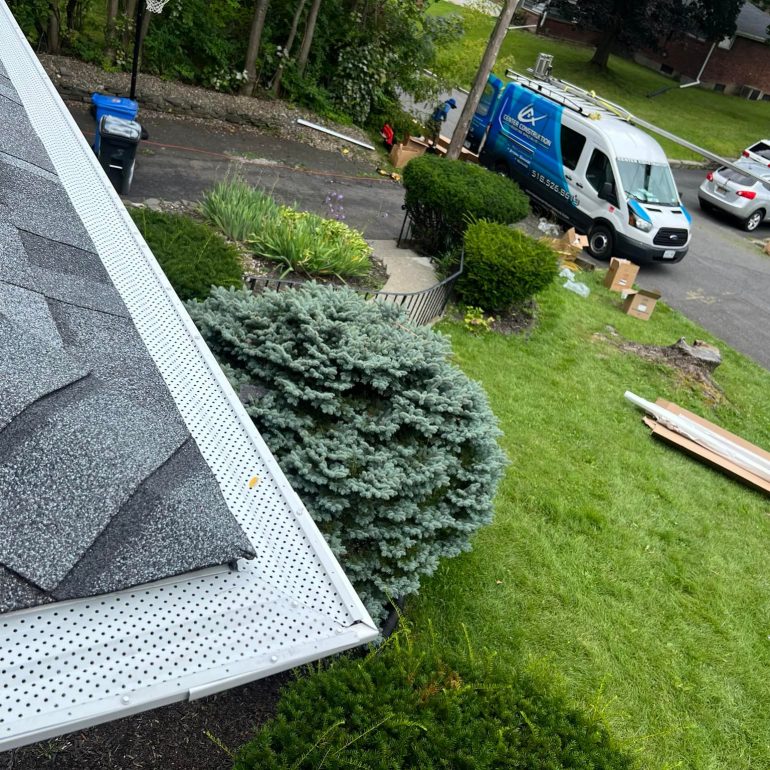


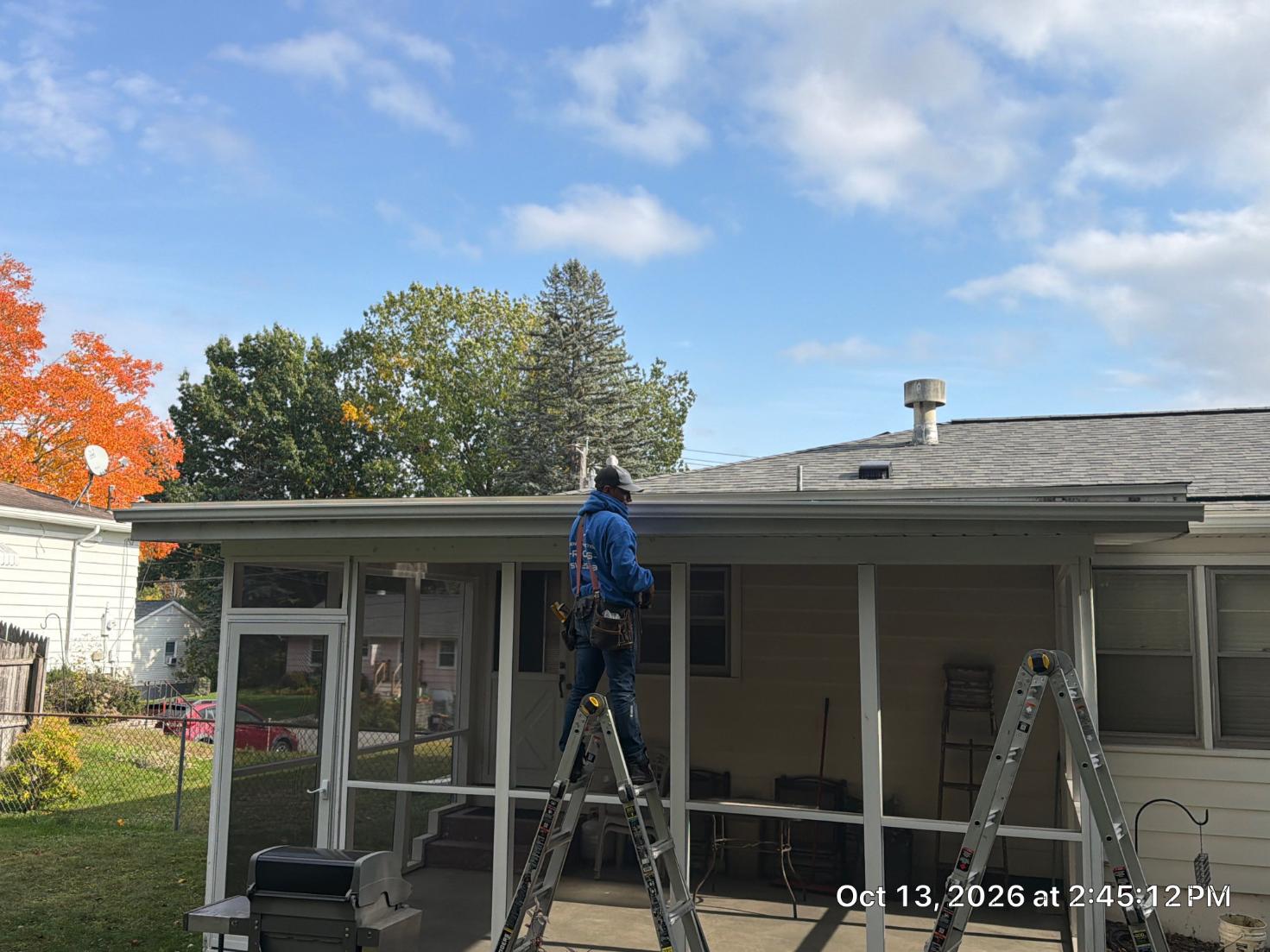
A screened porch provides a comfortable outdoor space while adding useful living areas to a home. However, like other roofed sections of a property, a screened porch needs an effective drainage system to manage rainwater. Proper gutter installation helps collect runoff along the roof edge and direct it toward suitable drainage locations instead of allowing water to fall directly around the porch.
A properly planned gutter system does more than improve the appearance of a roofline. It also helps manage water around the porch structure, exterior walls, walkways, and nearby landscaping. The positioning of gutters, appropriate downspout placement, and secure attachment are all important considerations when planning this type of project.
Whether you are installing gutters on a newly constructed screened porch or improving an existing drainage system, understanding the installation process can help you make informed decisions about protecting your property.
Gutter installation along a screened porch roofline helps collect rainwater and direct it through downspouts to appropriate discharge locations. A correctly planned system can reduce uncontrolled roof runoff, limit water splashing around the porch, and help protect nearby exterior surfaces from moisture exposure.
Proper measurements, compatible gutter materials, suitable slope, secure mounting, and effective drainage planning are essential parts of the installation process.
Why Does a Screened Porch Need Proper Gutter Installation?
A screened porch is exposed to outdoor weather conditions even though its roof provides overhead protection. Rainwater falling onto the porch roof needs a controlled drainage path. Without an effective gutter arrangement, runoff can discharge directly along the roof edge and create unwanted moisture around the structure.
Proper gutter installation helps organize the movement of rainwater from the roof to designated discharge points. This is particularly useful when a porch is located near a home’s foundation, paved walkway, landscaped area, or exterior entrance.
Some important reasons to consider installing gutters around a screened porch include:
- Controlled Rainwater Flow: Gutters collect water along the roof edge and help direct it toward downspouts.
- Foundation Protection: Properly discharged rainwater can help reduce concentrated runoff near the foundation.
- Reduced Water Splashing: A suitable gutter system helps prevent uncontrolled roof runoff from continuously falling around the porch.
- Exterior Protection: Managing roof runoff helps reduce repeated moisture exposure around nearby exterior surfaces.
- Better Outdoor Usability: Proper drainage can make the area around porch entrances and walkways more comfortable during rainy weather.
Gutter systems do not replace proper grading or other drainage measures, but they can play an important role in a property’s overall water management plan.
Understanding Gutter Placement Around a Screened Porch
Gutter placement is an important part of the installation process. The system should follow the appropriate roof edge so it can collect runoff effectively without interfering with the porch structure, roof overhang, or exterior features.
Positioning Gutters Along the Roof Edge
Gutters are generally installed along the lower edge of a roof where rainwater naturally collects before leaving the roof surface. For a screened porch, the contractor should evaluate the roofline, fascia condition, overhang, and drainage direction before determining the final placement.
Proper positioning helps ensure that water enters the gutter instead of flowing behind it or overshooting its outer edge during heavier rainfall.
Planning Downspout Locations
Downspouts provide the route through which collected water moves from the gutters toward ground-level discharge points. Their locations should be planned before installation begins.
Downspouts should be positioned where they can direct water away from vulnerable areas, including porch entrances, walkways, and the building foundation. The discharge arrangement should also avoid creating unwanted water accumulation in nearby landscaping.
Considering the Porch Design
Screened porches can have different roof configurations, support posts, fascia designs, and surrounding structures. These features can affect gutter dimensions, mounting locations, and downspout routing.
A suitable installation plan considers the entire porch roofline rather than selecting gutter positions based only on appearance.
How to Choose the Right Gutters for a Screened Porch
Choosing the appropriate gutter system involves evaluating the roof area, expected rainwater flow, building design, and installation requirements. Different materials and gutter profiles can provide different advantages depending on the property.
1. Aluminum Gutters
Aluminum is a commonly used gutter material because it is relatively lightweight and available in different colors and styles. It can be a suitable option for many residential rooflines when properly installed and maintained.
2. Vinyl Gutters
Vinyl gutters are lightweight and resistant to rust. They are available in sections and can be used for certain residential drainage projects. Their suitability depends on the property’s exposure conditions and the product’s specifications.
3. Steel Gutters
Steel gutter systems provide a rigid option for applications that require additional material strength. The coating, finish, and maintenance requirements should be considered when selecting this material.
4. Seamless Gutters
Seamless gutters are manufactured to fit the required roofline dimensions with fewer joints along the gutter run. Reducing the number of sectional connections can help minimize potential leakage points, although proper installation and maintenance remain essential.
The final selection should account for the porch roof’s size, rainfall conditions, gutter capacity, appearance, and compatibility with the existing exterior.
Gutter Installation Process: Step-by-Step Guide
Successful gutter installation involves careful preparation and accurate placement. Each stage helps ensure that the completed system collects and directs rainwater effectively.
Step 1: Inspect the Screened Porch Roofline
The installation process begins with evaluating the roof edge and the existing exterior structure. Contractors examine the roofline, fascia boards, soffit area, supporting components, and potential gutter attachment points.
Any damaged or deteriorated fascia should be identified before new gutters are installed. A secure and suitable mounting surface is important because the gutter system must support its own weight and the water it collects.
The roof configuration and existing drainage conditions should also be reviewed to determine the most appropriate gutter arrangement.
Step 2: Measure the Roof Edge
Accurate measurements help determine the required gutter length, number of sections, outlet positions, and downspout locations.
The contractor evaluates the roof edge and identifies the direction in which water should travel. Roof area, roof pitch, local rainfall intensity, and the number of drainage outlets all influence the system design.
Proper measurements help avoid unnecessary joints and support a more organized installation layout.
Step 3: Select the Appropriate Gutter System
After measuring the roofline, the next step is choosing a suitable gutter material, profile, and size.
The gutter system should be selected according to the roof’s water collection requirements and the manufacturer’s product specifications. Choosing an undersized system can increase the risk of overflow during heavy rainfall.
Material compatibility and exterior appearance should also be considered when selecting the final gutter system.
Step 4: Plan the Gutter Slope and Water Flow
Gutters need an appropriate slope so collected water can move toward the designated outlets rather than remaining in the channel.
During this stage, installers determine the direction of water movement and establish the correct mounting positions. The required slope depends on the gutter system and its manufacturer’s installation guidelines.
Correct slope planning helps reduce standing water and supports consistent drainage from the roofline.
Step 5: Prepare the Mounting Surface
Before attaching the gutter system, the fascia and mounting surface should be checked for damage, loose material, or other conditions that could affect installation.
Contractors address any necessary preparation before installing brackets, hangers, and other supporting components.
Proper preparation provides a more stable foundation for the gutter assembly and helps reduce the possibility of sagging or loose connections.
Step 6: Install and Secure the Gutters
Once the mounting positions are established, the gutter sections are installed along the prepared roofline.
Appropriate hangers and fasteners are used according to the selected gutter system’s requirements. The installation should maintain consistent alignment, the planned slope, and secure attachment across the entire gutter run.
Connections, end caps, and joints should also be properly assembled to help prevent water leakage.
Step 7: Connect the Downspouts
After the gutter sections are secured, downspout outlets and connecting components are installed.
Downspouts should be positioned to receive water from the gutter channels and direct it toward appropriate discharge locations.
Extensions or other suitable drainage arrangements may be needed to carry water farther away from the building foundation. The final discharge location should not create water accumulation or direct runoff toward neighboring properties.
Step 8: Test the Completed Gutter System
The final stage involves checking the installation to ensure that the gutter system performs as intended.
Contractors inspect the alignment, mounting connections, joints, end caps, and downspout connections. Water flow can also be evaluated to check for leakage, improper slope, standing water, or drainage obstructions.
Any identified issues should be corrected before considering the installation complete.
Common Gutter Installation Problems to Avoid
Poor installation can reduce the effectiveness of a gutter system and lead to ongoing drainage problems. Identifying common issues during planning and installation can help property owners avoid unnecessary repairs.
- Incorrect Gutter Slope: Poor positioning can cause water to collect instead of flowing toward the outlets.
- Inadequate Gutter Capacity: An undersized gutter system may struggle to manage runoff from the roof during heavy rainfall.
- Weak Mounting Connections: Improperly secured hangers may contribute to sagging or separation.
- Poor Downspout Placement: Discharging water near the foundation or porch entrance can create avoidable moisture concerns.
- Damaged Fascia Boards: Installing gutters on an unsuitable mounting surface can affect long-term stability.
- Unsealed Connections: Improperly assembled joints and outlets may allow water to leak from the gutter system.
Gutter dimensions, hanger spacing, slope, and downspout capacity should be determined according to roof conditions, local rainfall requirements, and the selected manufacturer’s installation specifications. A single layout does not work for every screened porch.
How Proper Gutters Help Protect the Area Around Your Porch
Roof runoff can affect several parts of a property when it is not directed through an appropriate drainage system. A screened porch may be surrounded by paved surfaces, landscaped areas, exterior walls, and foundation components that need protection from repeated water discharge.
A properly installed gutter system helps manage these conditions by collecting water at the roof edge and sending it through downspouts to appropriate discharge points.
Some potential benefits include:
- Reducing uncontrolled water discharge around the porch.
- Helping limit repeated water splashing against nearby exterior surfaces.
- Supporting better drainage around porch entrances and walkways.
- Helping control runoff near the building foundation.
- Reducing water concentration around landscaping and other exterior areas.
For additional information about managing roof runoff around a property, read our guide on how gutters help prevent basement flooding.
Gutter Maintenance Tips for Screened Porches
Installing gutters is only one part of maintaining an effective drainage system. Regular maintenance helps keep the channels and downspouts clear so rainwater can move through the system without unnecessary obstruction.
Property owners should consider the following maintenance practices:
- Remove Leaves and Debris: Clear accumulated leaves, twigs, and other materials that may block the gutter channels.
- Inspect Gutter Connections: Check joints, end caps, and outlet connections for visible signs of leakage.
- Check Mounting Hardware: Look for loose hangers, sagging sections, or separated connections.
- Monitor Downspouts: Make sure water can flow through the downspouts without obstruction.
- Inspect After Severe Weather: Check for damage or displaced components following strong winds and storms.
- Maintain Proper Discharge: Ensure extensions and drainage outlets continue directing water away from vulnerable areas.
Routine inspections can help identify minor gutter problems before they develop into more extensive drainage concerns. For additional exterior maintenance guidance, explore our roof cleaning and maintenance tips.
When Should You Consider Professional Gutter Installation?
Some gutter problems may require more than basic cleaning or minor adjustments. Professional evaluation can help determine whether an existing system needs repair, replacement, or a completely new installation.
Consider arranging an assessment when:
- You are constructing a new screened porch or extending an existing roofline.
- Existing gutters repeatedly overflow during rainfall.
- Gutters are sagging or pulling away from the fascia.
- Water leaks from joints or end caps.
- Downspouts are not directing water away from vulnerable areas.
- The existing gutter system is damaged or no longer suitable for the roof area.
A professional assessment can help identify the cause of drainage problems and determine which gutter solution is appropriate for the property’s roofline and exterior design.
Frequently Asked Questions About Gutter Installation
Does a screened porch need gutters?
A screened porch can benefit from a gutter system that collects roof runoff and directs it toward appropriate drainage locations. The need and design depend on the roof configuration, surrounding landscape, and existing drainage conditions.
Where should gutters be installed on a screened porch?
Gutters are generally installed along the lower edge of the porch roof where rainwater leaves the roof surface. Their final position should account for the roofline, fascia condition, overhang, and planned downspout locations.
What type of gutters are best for a screened porch?
Aluminum, vinyl, steel, and seamless gutters are among the available options. The best choice depends on the porch roof size, drainage requirements, exterior design, material compatibility, and installation specifications.
How do you prevent water from overflowing porch gutters?
Appropriate gutter sizing, correct slope, suitable downspout capacity, and regular cleaning all help manage rainwater. The system should be designed for the roof area and expected rainfall conditions.
Can existing gutters be replaced around a screened porch?
Yes. Existing gutters can be replaced when they are damaged, deteriorated, undersized, or no longer suitable for the roofline. The mounting surface and drainage arrangement should be evaluated before replacement.
How often should screened porch gutters be inspected?
Gutter inspections should be scheduled regularly, particularly during seasonal changes and after severe weather. Areas with nearby trees may need more frequent cleaning to prevent leaves and debris from obstructing water flow.
Do downspouts need extensions around a screened porch?
Downspout extensions may be useful when the existing discharge location is too close to the porch or building foundation. The appropriate arrangement depends on site grading and where water can be safely discharged.
Improve Your Home’s Drainage With Proper Gutter Installation
A screened porch should have a drainage arrangement that works with its roof design and surrounding exterior. Proper gutter installation helps collect rainwater, direct runoff through downspouts, and reduce uncontrolled water discharge around the property.
From evaluating the roofline and selecting suitable materials to securing gutter sections and testing water flow, every stage contributes to a functional drainage system. Regular maintenance also helps keep gutters clear and supports consistent water management throughout the year.
Center Construction Roofing provides Gutter Services for property owners looking to address their exterior drainage needs. Whether your property requires a new gutter system or attention to an existing installation, a proper assessment can help determine the right approach.
You can also explore our Gutter Installation Project to see an example from our project portfolio.
Protecting your roofline starts with a suitable drainage solution. Contact Center Construction Roofing to discuss your gutter installation and exterior roofing needs.
Need Gutter Installation for Your Property?
Discuss your gutter and exterior drainage needs with Center Construction Roofing.