A commercial flat roof protects a building from rain, moisture, temperature changes, and everyday environmental exposure. Over time, the existing roofing surface may begin showing signs of wear that require professional attention. Commercial flat roof coating offers a protective restoration option for suitable roofing systems without automatically requiring a complete roof replacement.
However, a successful coating project involves more than simply applying a liquid product over an existing roof. The process requires careful roof evaluation, material compatibility checks, appropriate preparation, accurate application, and sufficient curing time. Each stage plays an important role in achieving a consistent protective finish.
Commercial flat roof coating is a liquid-applied protective system installed over an existing roof that is suitable for restoration. The process generally includes roof inspection, coating selection, surface preparation, necessary repairs, primer application when required, even coating application, curing, and final quality inspection.
The exact application requirements depend on the existing roof material and the coating manufacturer’s specifications.
What Is Commercial Flat Roof Coating?
Commercial flat roof coating is a liquid-applied roofing product designed to create a protective layer over an existing roof surface. Once properly applied and cured, the coating forms a continuous finish intended to help protect the underlying roofing assembly from environmental exposure.
Depending on the selected system, roof coatings may offer moisture resistance, weather protection, and reflective properties. Some products are designed for specific roofing materials, while others require additional preparation or compatible primers before application.
Common commercial roof coating options include:
- Silicone Roof Coatings: Used in compatible roofing systems where moisture resistance is an important consideration.
- Acrylic Roof Coatings: Water-based coating options available for suitable roofing substrates.
- Elastomeric Roof Coatings: Flexible coatings designed to accommodate certain types of roof movement and surface conditions.
- Reflective Roof Coatings: Designed to reflect sunlight when the selected product and color provide the intended reflective performance.
Choosing the right product requires evaluating the existing roof material, its condition, and the manufacturer’s approved application requirements. A coating suitable for one roofing system may not be appropriate for another.
When Is a Commercial Flat Roof Suitable for Coating?
Not every commercial flat roof is a suitable candidate for a coating application. Before selecting a restoration system, the existing roof needs to be evaluated to determine whether its condition supports the proposed work.
A commercial roof may be considered for coating when:
- The existing roofing assembly remains suitable for restoration.
- The surface can be properly cleaned and prepared.
- Roofing seams, flashing, and other vulnerable areas can be repaired.
- There is no unresolved moisture condition that would compromise the coating system.
- The selected coating is compatible with the existing roofing material.
Roofs with widespread deterioration, significant trapped moisture, or underlying structural problems may require a different roofing solution. A professional assessment helps determine whether coating, repair, or replacement is the appropriate option.
How to Choose the Right Commercial Roof Coating
Selecting a commercial roof coating requires more than comparing product names. The existing roofing material and the intended performance of the new system should guide the selection.
1. Identify the Existing Roofing Material
Commercial properties may have EPDM, TPO, modified bitumen, metal, or other low-slope roofing assemblies. Each material has different surface characteristics, so compatibility should be confirmed before choosing a coating.
2. Consider the Building’s Conditions
Roof drainage, sun exposure, existing surface conditions, and environmental exposure can influence which coating system is appropriate. These factors should be evaluated as part of the project assessment.
3. Confirm Manufacturer Requirements
Coating manufacturers provide specific requirements for approved substrates, surface preparation, primers, application thickness, coverage rates, and curing conditions. Following the appropriate product specifications is essential for a properly installed system.
Commercial Flat Roof Coating: Step-by-Step Application Process
A well-organized application process helps ensure that the coating is installed consistently and that important areas of the existing roof receive appropriate attention.
Step 1: Complete a Professional Roof Inspection
The first stage involves evaluating the existing commercial flat roof to understand its overall condition. Roofing professionals examine the surface, drainage areas, seams, flashing, penetrations, and other components that may affect the coating application.
The inspection also helps identify existing leaks, damaged areas, deteriorated materials, and potential moisture-related concerns that need to be addressed before coating begins.
Step 2: Confirm Coating Compatibility
Once the roof condition has been assessed, the next step is selecting a coating system that is compatible with the existing roofing material.
Depending on the roof assembly, contractors may need to complete an adhesion test or test application to evaluate how the selected coating interacts with the existing surface. This helps identify potential bonding problems before the full project begins.
Step 3: Prepare and Clean the Roof Surface
Surface preparation creates a suitable foundation for the coating system. Dirt, loose debris, chalking, grease, and other contaminants can interfere with coating adhesion.
The preparation method depends on the existing roof material and the product requirements. The surface must meet the coating manufacturer’s cleanliness and moisture conditions before application.
Proper preparation also allows contractors to identify areas that require additional attention before the coating is installed.
Step 4: Repair Seams, Flashing, and Vulnerable Areas
Before applying the main coating layer, existing roof damage and vulnerable transition areas need to be addressed.
This stage may include:
- Repairing damaged roof seams and joints.
- Addressing deteriorated flashing sections.
- Inspecting roof penetrations and equipment connections.
- Correcting identified problem areas around drainage components.
- Allowing repair materials to cure as required.
These areas require attention because a coating should not be expected to replace necessary repairs to the existing roofing assembly.
Step 5: Apply Primer When Required
Some commercial roof coating systems require a compatible primer to improve adhesion between the existing surface and the new coating.
Primer selection depends on the substrate, coating chemistry, and manufacturer’s instructions. Certain metal, concrete, and existing membrane surfaces may have specific primer requirements.
The primer must be applied and allowed to cure according to the product specifications before the next application stage. Not every coating system requires a separate primer.
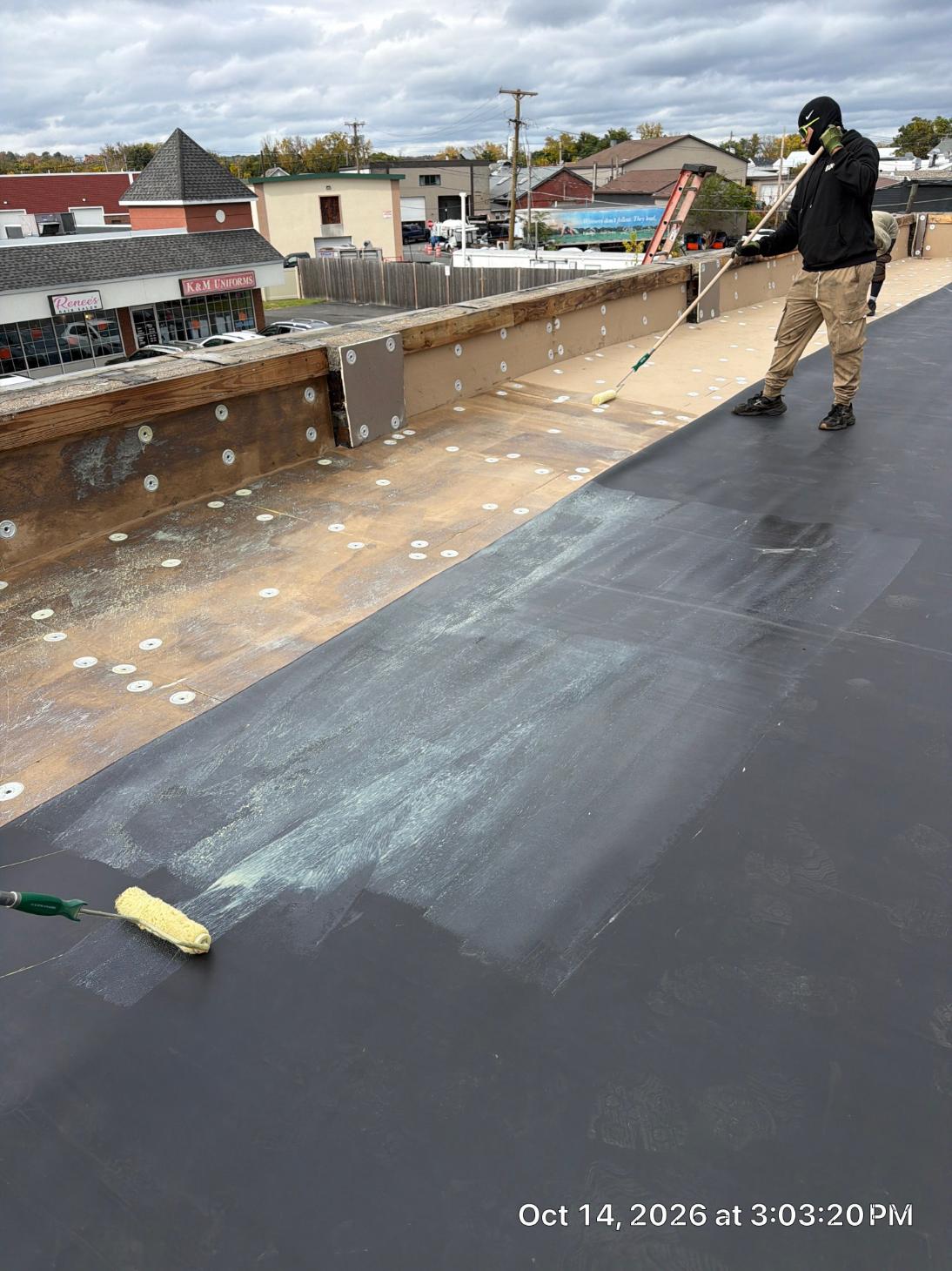
Step 6: Apply the Commercial Roof Coating
Once the surface and any required primer are ready, contractors begin applying the selected roof coating.
Depending on the system, application may involve rollers, brushes, or professional spray equipment. The coating is distributed across the approved roofing surface to achieve consistent coverage.
Important application considerations include:
- Following the manufacturer’s recommended coverage rate.
- Maintaining the specified wet-film and dry-film thickness.
- Applying the required number of coating layers.
- Maintaining appropriate application intervals between coats.
- Ensuring consistent coverage around roof transitions and details.
Some systems require multiple coats to achieve the specified total thickness. The direction, sequence, and timing of each application should follow the selected coating system’s instructions.
Step 7: Allow Proper Curing Time
After application, the coating needs sufficient time to cure and develop its intended protective properties.
Curing time can vary depending on the coating formulation, application thickness, temperature, humidity, and other environmental conditions.
Contractors should follow the manufacturer’s recommended curing requirements and protect the newly coated surface from unsuitable weather conditions during this stage.
Step 8: Complete the Final Roof Inspection
The final inspection helps verify that the completed coating system meets the project requirements.
Contractors review the finished surface for consistent coverage, visible application defects, and areas that may require additional attention. Critical roof transitions, drainage points, flashing, and other detailed sections should also be checked.
Project records may include material information, application measurements, inspection findings, and applicable warranty documentation.
What Affects the Quality of a Commercial Roof Coating Application?
The performance of a commercial roof coating depends on several connected factors. Even a suitable coating product may not perform as intended when the existing roof condition or application process is overlooked.
- Roof Surface Condition: Contaminated or unsuitable surfaces may interfere with adhesion.
- Material Compatibility: The selected coating must be approved for the existing roofing substrate.
- Proper Application Thickness: Incorrect coating thickness can affect the finished system.
- Weather Conditions: Temperature, moisture, and rainfall can influence application and curing.
- Attention to Roof Details: Seams, penetrations, flashing, and drainage areas require appropriate treatment.
- Final Quality Inspection: Reviewing the completed application helps identify areas requiring correction.
Every commercial roof coating system has its own installation specifications. Contractors should follow the selected manufacturer’s technical instructions, including substrate requirements, primer recommendations, application thickness, weather limitations, and curing times.
Why Professional Commercial Roof Coating Matters
Professional application helps ensure that each stage of the restoration process receives the appropriate attention. From initial inspection to the final quality check, an organized approach helps reduce avoidable application problems.
When a suitable existing roof receives the correct coating system and proper installation, potential advantages may include:
- Additional protection against moisture intrusion.
- Improved resistance to environmental exposure.
- Reflective performance from appropriately selected coating products.
- Support for restoring an existing roof without automatically requiring complete replacement.
- A planned approach to future roof maintenance.
The actual benefits and expected service life depend on the existing roof assembly, selected coating, application quality, and ongoing maintenance.
Maintaining a Commercial Flat Roof After Coating
Completing the coating application is not the final step in maintaining a commercial roof. Regular inspections and appropriate maintenance help property owners monitor the condition of the protective system.
After the coating has cured, property owners should consider:
- Checking the coated surface for visible wear or damage.
- Monitoring roof drainage areas and keeping drains clear.
- Inspecting seams, flashing, and rooftop penetrations.
- Checking the roof after severe weather events.
- Scheduling inspections according to the coating manufacturer’s recommendations.
- Addressing any identified coating damage or repair requirements promptly.
Proper maintenance helps identify developing concerns before they become more extensive roofing problems.
Frequently Asked Questions About Commercial Flat Roof Coating
What is commercial flat roof coating?
Commercial flat roof coating is a liquid-applied protective roofing system designed for suitable existing commercial roofs. It creates a continuous protective layer that can help resist moisture and environmental exposure.
Can you apply roof coating over an existing flat roof?
Yes, certain existing flat roofing systems can receive a compatible coating. However, the roof must first be inspected to evaluate its condition, moisture concerns, surface suitability, and coating compatibility.
Does a commercial flat roof need primer before coating?
Not every commercial roof coating requires primer. The need for primer depends on the existing roofing material, the selected coating, and the manufacturer’s application requirements.
How many coats are needed for a commercial flat roof?
The number of coats depends on the selected coating system, specified coverage rate, and required total film thickness. Contractors should follow the manufacturer’s recommended application specifications.
How long does commercial roof coating take to cure?
Curing time varies depending on the coating product, application thickness, temperature, humidity, and weather conditions. The manufacturer provides the appropriate curing instructions for each system.
Can roof coating fix an existing roof leak?
Roof coating should not be treated as a substitute for repairing an existing leak. The source of moisture intrusion must be identified and repaired before applying the coating system.
Is roof coating better than complete roof replacement?
It depends on the existing roof’s condition. Coating may be a suitable restoration option for certain serviceable roofs, while roofs with extensive deterioration, trapped moisture, or structural problems may require more extensive repairs or replacement.
Protect Your Commercial Roof With the Right Coating Solution
Commercial flat roof coating requires careful planning, compatible materials, and proper application techniques. From inspecting the existing roofing system to completing the final coating inspection, each stage contributes to the quality of the finished project.
Center Construction Roofing provides commercial roofing and waterproof coating services for property owners seeking solutions for their roofing systems. Whether your building needs an evaluation of an existing flat roof or a suitable coating application, choosing the right approach starts with understanding the condition of your roof.
Explore our Waterproof Coating Services and Commercial Roofing Services to learn more about available roofing solutions.
Need a Commercial Roof Coating Solution?
Contact Center Construction Roofing to discuss your commercial roofing needs and arrange a professional roof assessment.