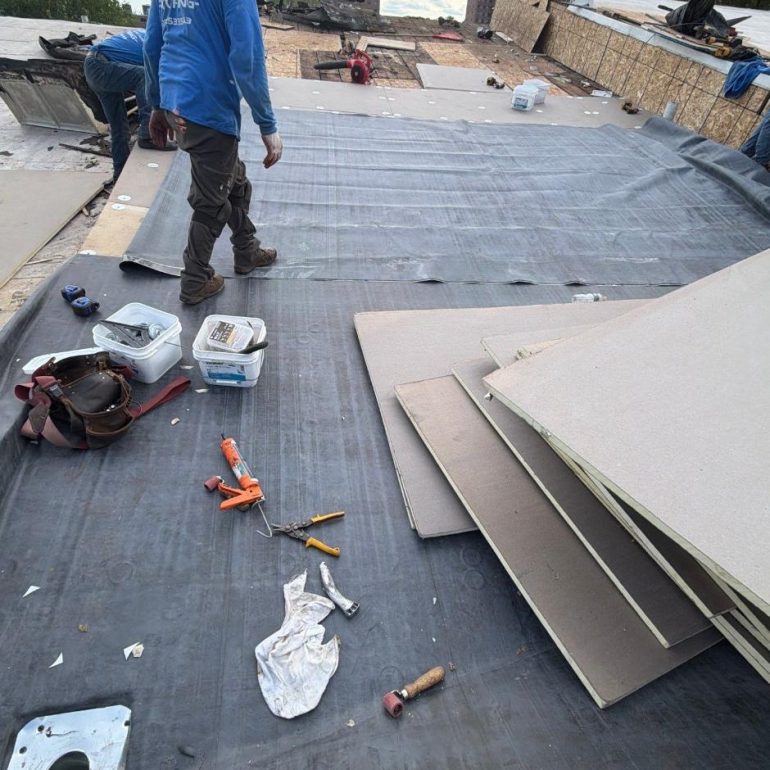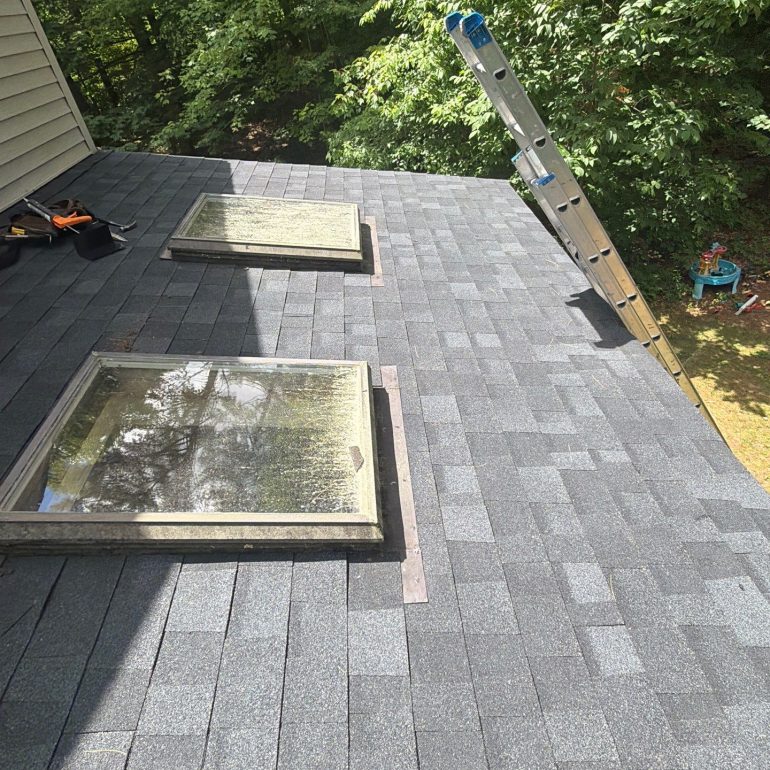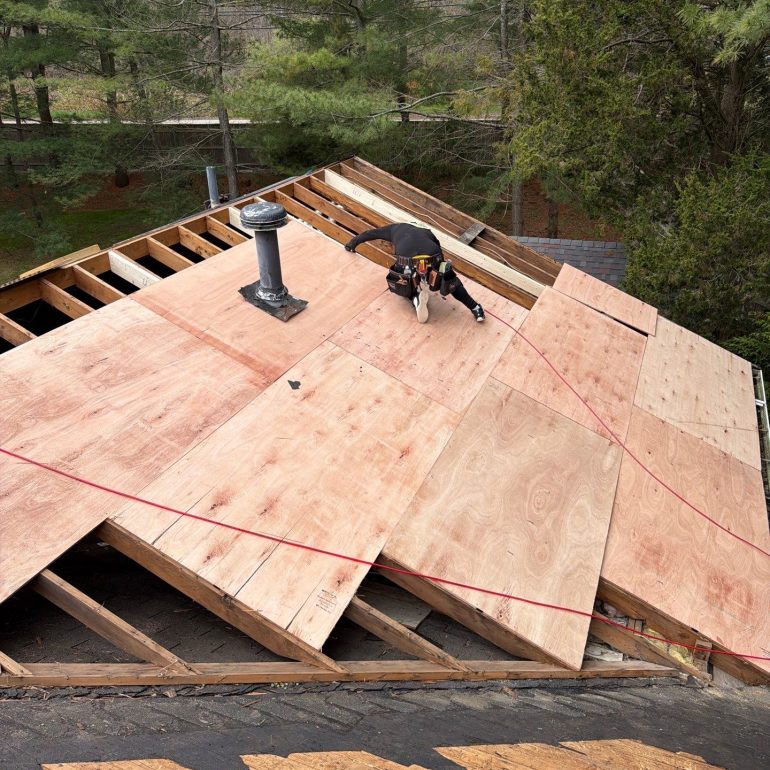


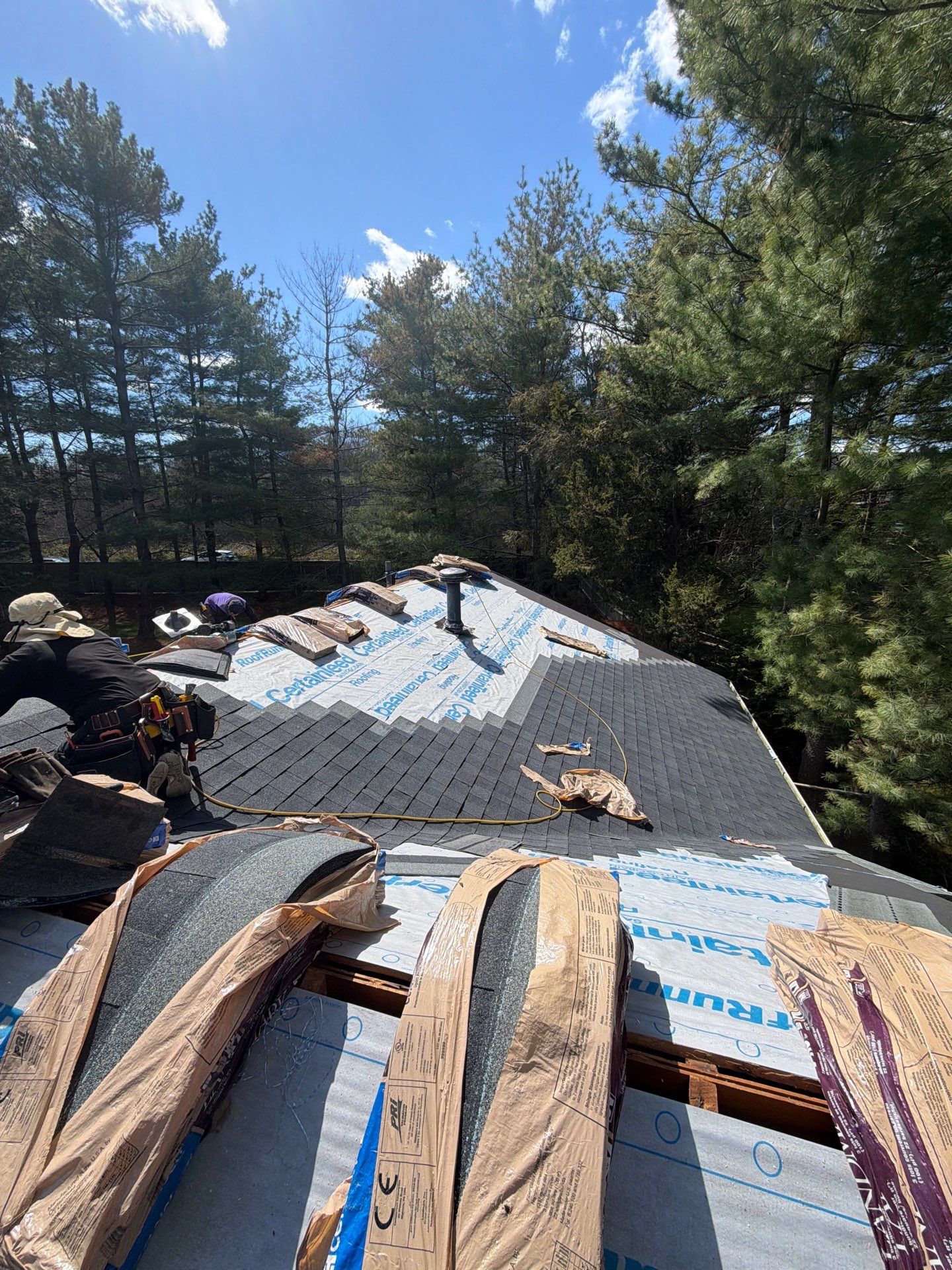
A professional asphalt shingle roof replacement is one of the most important investments homeowners can make to protect their property. The image above shows a roofing crew installing new shingles over a residential roof surrounded by mature pine trees. This type of environment presents unique challenges, including debris accumulation, moisture retention, and increased wear from falling branches. A properly installed roofing system helps improve durability, energy efficiency, and long-term performance while enhancing curb appeal.
Why Asphalt Shingle Roof Replacement Is Important in Wooded Areas
Homes located in heavily wooded settings often experience roofing conditions that differ from properties with more open exposure. Leaves, pine needles, and organic debris can collect on the roof surface, trapping moisture and accelerating deterioration.
An asphalt shingle roof replacement provides an opportunity to upgrade aging materials and install modern underlayment systems designed to improve weather protection. During the replacement process, contractors remove worn roofing materials, inspect the roof deck, and address any structural concerns before installing new shingles.
Professional Roof Replacement services help homeowners avoid costly water damage, reduce the risk of leaks, and improve the overall lifespan of the roofing system. New asphalt shingles are engineered to withstand wind, rain, UV exposure, and seasonal temperature fluctuations, making them a popular choice for residential properties.
Key Components of a High-Quality Roofing System
A successful roof replacement involves much more than simply installing new shingles. The image highlights several important components visible during the installation process.
Modern roofing systems typically include:
- Roof decking inspection and repairs
- Synthetic underlayment installation
- Ice and water protection in vulnerable areas
- Proper flashing around penetrations
- Ridge ventilation systems
- Architectural asphalt shingles
The underlayment visible in the image serves as a critical moisture barrier beneath the shingles. This layer provides secondary protection against water infiltration and helps safeguard the home’s structure.
Professional Roofing Services focus on ensuring each component works together as a complete system. Proper installation techniques help maximize performance and prevent premature failures caused by poor workmanship or inadequate ventilation.
Benefits of Architectural Asphalt Shingles
Architectural asphalt shingles remain one of the most popular roofing materials for residential properties because they provide an excellent balance of durability, appearance, and value.
Some of the primary benefits include:
- Enhanced wind resistance
- Attractive dimensional appearance
- Long service life
- Wide variety of color options
- Low maintenance requirements
- Cost-effective performance
For homeowners surrounded by trees, architectural shingles offer additional durability compared to older three-tab roofing systems. Their thicker construction helps improve resistance to weather-related wear and environmental exposure.
When combined with professional Roof Inspection and installation practices, architectural shingles can provide decades of reliable protection. Many modern products also include advanced granule technology designed to resist UV degradation and maintain their appearance over time.
What Homeowners Can Expect During a Roof Replacement Project
A roof replacement project typically begins with a comprehensive assessment of the existing roofing system. Contractors evaluate the condition of shingles, flashing, ventilation components, and roof decking before developing a replacement plan.
Once materials arrive on site, the existing roof is removed and the decking is inspected for signs of damage. Any compromised sections are repaired before synthetic underlayment and moisture barriers are installed.
The roofing crew then begins installing new shingles according to manufacturer specifications. Proper alignment, fastening patterns, and ventilation details are essential for long-term performance.
For properties surrounded by trees, contractors may also recommend trimming overhanging branches to reduce debris accumulation and limit the risk of storm-related damage. Routine maintenance following installation can help preserve the roof’s condition and maximize its lifespan.
Working with an experienced contractor such as Center Construction Roofing ensures the project is completed according to industry standards while protecting the home throughout every stage of construction.
Long-Term Value of Investing in a New Roof
A new roof delivers benefits that extend beyond basic weather protection. Homeowners often experience improved energy efficiency, enhanced curb appeal, and increased property value following a roof replacement.
Modern roofing systems are designed to perform efficiently in demanding environments, including wooded residential settings where moisture management and debris control are especially important.
In addition to protecting the home’s structure, a professionally installed roof provides peace of mind during severe weather events. Investing in quality materials and skilled installation helps reduce future repair costs and minimizes the likelihood of unexpected roofing issues.
Whether a roof has reached the end of its lifespan or has sustained weather-related damage, replacing it before major problems develop is often the most cost-effective long-term solution.
FAQ
How long does an asphalt shingle roof replacement take?
Most residential asphalt shingle roof replacement projects can be completed within one to three days, depending on roof size, complexity, weather conditions, and any necessary deck repairs.
Are asphalt shingles a good choice for homes surrounded by trees?
Yes. Architectural asphalt shingles provide excellent durability, weather resistance, and value. They perform well in wooded environments when combined with proper ventilation and regular maintenance.
How often should a roof be inspected after replacement?
Homeowners should schedule a professional roof inspection at least once per year and after major storms. Routine inspections help identify potential issues early and extend the life of the roofing system.