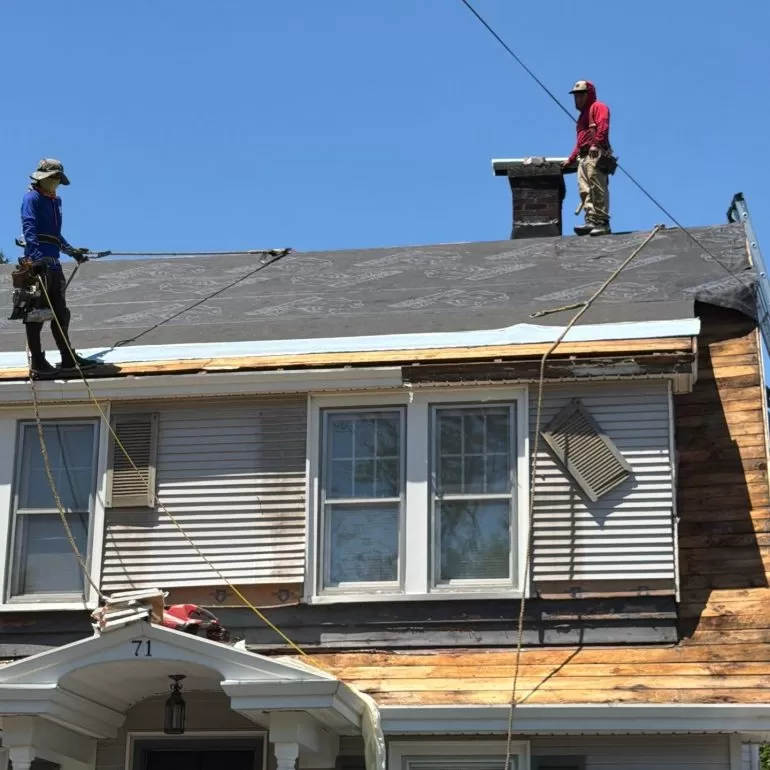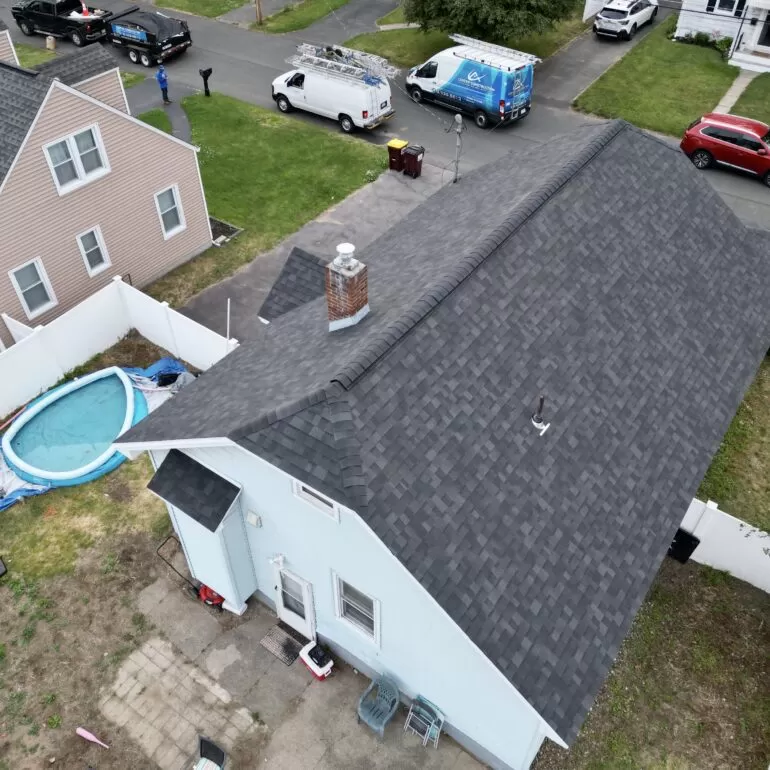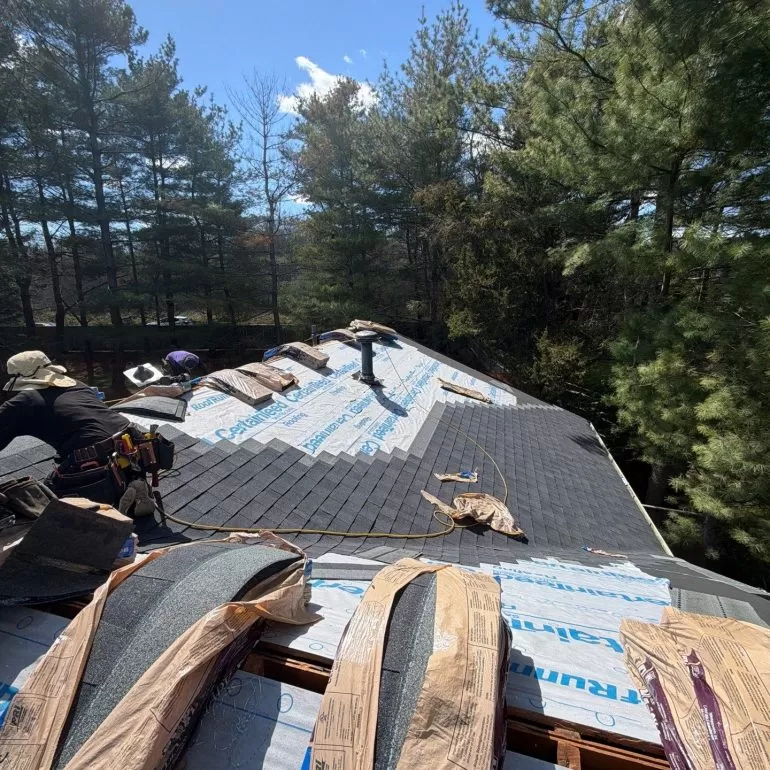

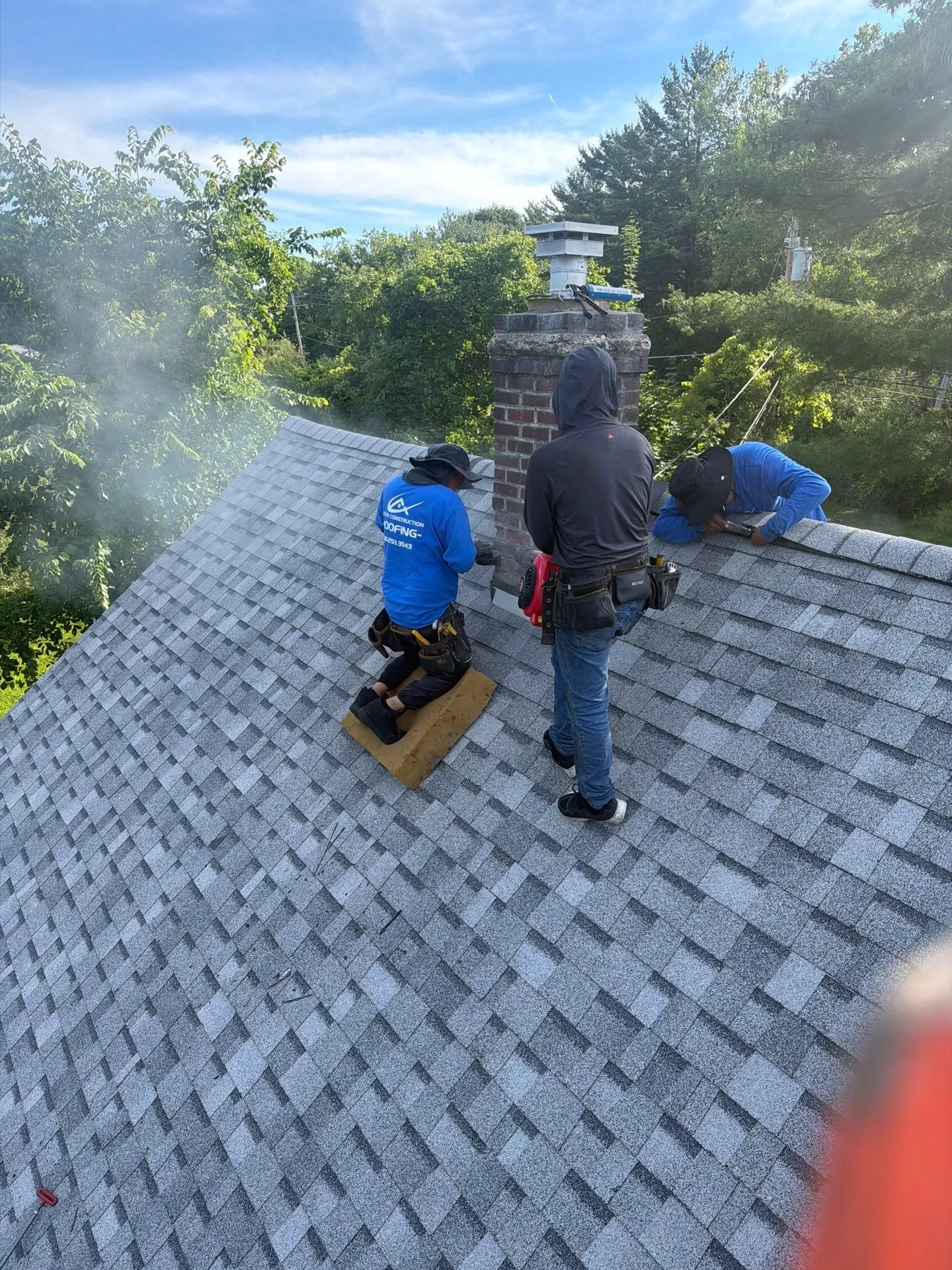
A quality chimney flashing repair is one of the most important steps in a successful asphalt shingle roof replacement. The image above shows experienced roofers carefully working around a brick chimney to ensure every flashing detail is properly installed before the project is completed. At Center Construction Roofing, attention to these critical areas helps homeowners avoid future leaks, water damage, and costly repairs.
Why Chimney Flashing Matters During a Roof Replacement
The connection between a roof and a chimney is one of the most vulnerable locations for water intrusion. Rain, melting snow, and ice naturally collect around the base of a chimney, making properly installed flashing essential for directing water safely away from the structure.
When replacing an aging roof, simply installing new shingles is not enough. Existing flashing may be rusted, bent, improperly sealed, or damaged from years of weather exposure. Replacing or repairing flashing during Roof Replacement ensures the entire roofing system performs as designed.
Professional flashing installation includes carefully fitting metal components around the chimney while integrating them beneath and over the new shingles. This layered approach creates multiple barriers against moisture and significantly reduces the risk of leaks.
Signs Your Chimney Flashing May Need Repair
Many homeowners don’t realize their chimney flashing has failed until water begins entering the home. However, several warning signs often appear before major damage occurs.
Common indicators include:
- Water stains on ceilings near the chimney
- Damp attic insulation
- Rusted or separated flashing
- Loose shingles surrounding the chimney
- Cracked sealant or deteriorating mortar joints
- Interior leaks during heavy rainstorms
During a professional Roof Inspection, contractors carefully evaluate these areas before beginning any roof replacement project. Catching flashing issues early can prevent extensive structural damage to decking, insulation, drywall, and framing.
The Importance of Proper Installation Techniques
Installing chimney flashing correctly requires precision and experience. Every roof has unique dimensions, roof pitches, and chimney configurations that require custom fitting.
The roofing crew shown in the image is carefully installing flashing around a brick chimney while working with architectural asphalt shingles. This process typically involves:
- Removing old flashing materials
- Inspecting roof decking for hidden water damage
- Installing step flashing alongside each course of shingles
- Adding counter flashing into the chimney mortar joints
- Sealing vulnerable transition points
- Ensuring proper water drainage around the chimney
These steps create a durable waterproof connection between the roofing system and masonry chimney.
Professional Roofing Services focus on these details because shortcuts around flashing are one of the leading causes of premature roof leaks.
Benefits of Combining Flashing Repair with a New Roof
Repairing chimney flashing during a roof replacement offers several long-term advantages.
First, replacing flashing while shingles are already removed is more efficient than attempting repairs later. It reduces labor costs and eliminates the need to disturb newly installed roofing materials.
Second, new flashing helps maximize the lifespan of the roofing system. Even premium architectural shingles cannot perform properly if water is allowed to enter around the chimney.
Third, updated flashing improves overall weather protection during heavy rain, snow, wind, and freeze-thaw cycles.
Finally, homeowners gain peace of mind knowing every component of the roofing system is working together as intended. Rather than addressing leaks after they occur, proactive flashing replacement helps prevent problems before they begin.
At Center Construction Roofing, every roof replacement includes careful attention to high-risk areas like chimneys, roof valleys, vents, and penetrations to deliver dependable, long-lasting performance.
Choosing an Experienced Roofing Contractor
Not every roofing contractor places the same emphasis on flashing details. While shingles are the most visible part of a roof, flashing often determines whether the system remains leak-free for decades.
When selecting a contractor, homeowners should look for a company that:
- Performs comprehensive roof inspections
- Replaces damaged flashing instead of covering it
- Uses quality roofing materials
- Has experience with masonry chimney installations
- Follows manufacturer installation guidelines
- Maintains a reputation for craftsmanship and customer satisfaction
A properly installed roof protects one of your home’s largest investments. Choosing experienced professionals ensures every component—from shingles to flashing—is installed with lasting durability in mind.
Center Construction Roofing is committed to delivering reliable roofing solutions with careful workmanship that helps homeowners protect their properties for years to come.
FAQ
Why should chimney flashing be replaced during a roof replacement?
Replacing chimney flashing during a roof replacement helps prevent leaks, ensures compatibility with the new roofing system, and eliminates hidden damage that may shorten the roof’s lifespan.
How long does chimney flashing typically last?
Quality metal flashing can last for many years, but exposure to weather, temperature changes, and aging sealants may eventually require repair or replacement during a new roof installation.
Can damaged chimney flashing cause roof leaks?
Yes. Damaged or improperly installed flashing is one of the most common causes of roof leaks because it allows water to enter where the chimney meets the roof surface. Prompt repairs help prevent costly interior and structural damage.