

Choosing the right roofing materials is one of the most important decisions during a new roof installation or replacement. While asphalt shingles provide the visible layer of protection, the material beneath them plays an equally important role in preventing moisture damage and extending the life of your roof. When comparing synthetic roofing underlayment vs felt, many homeowners want to know which option delivers the best long-term value.
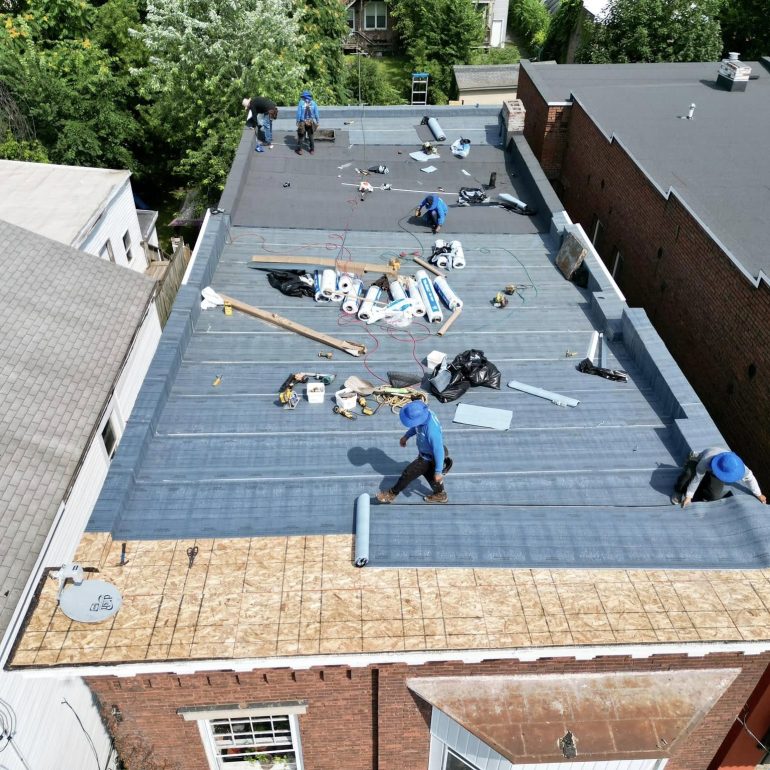
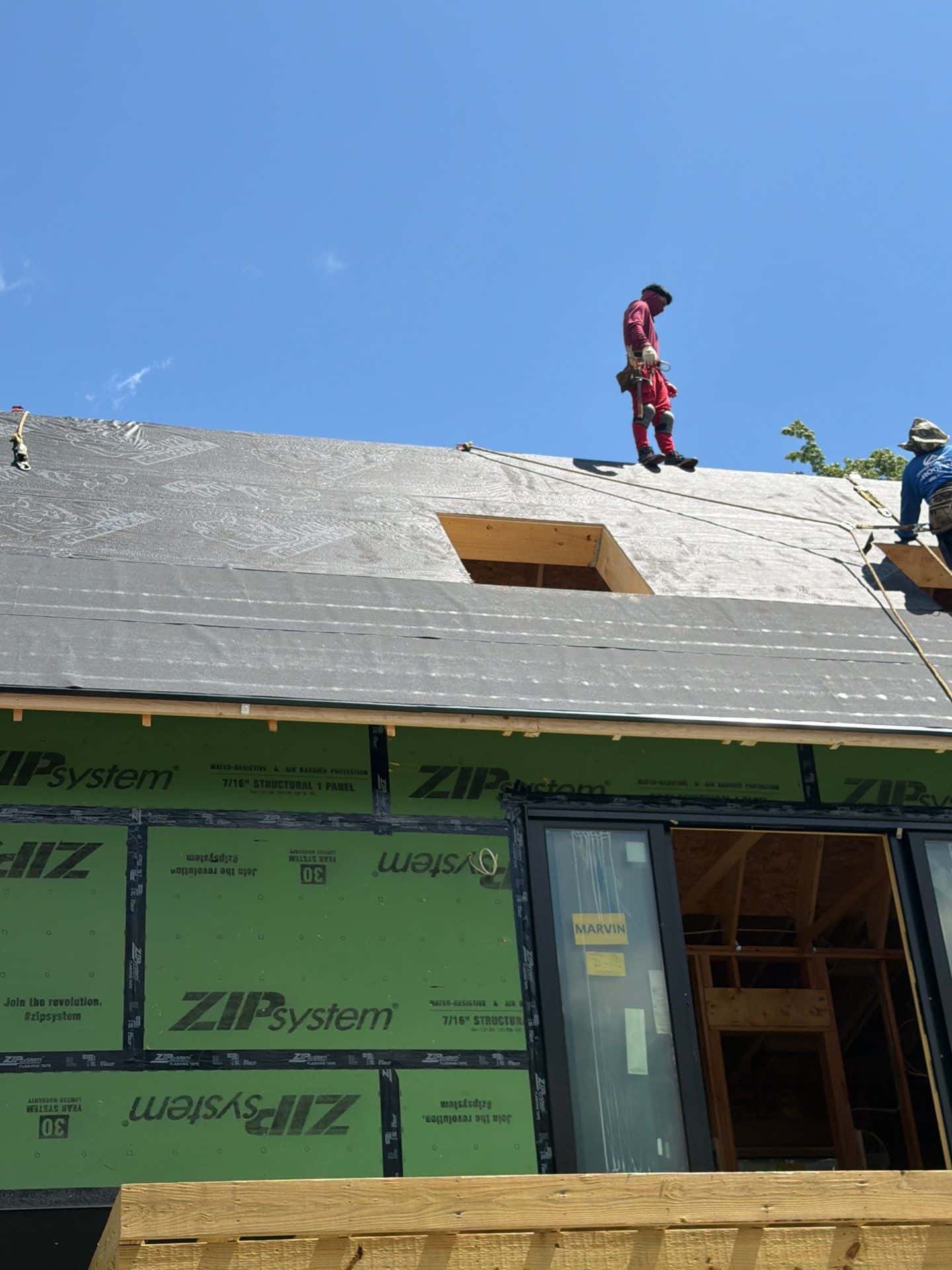
The image above shows a new residential roofing project where professional roofers are installing synthetic underlayment over ZIP System roof sheathing before the shingles are installed. This stage of construction is essential because it creates a secondary moisture barrier that helps protect the home from wind-driven rain, snow, and unexpected water intrusion. Homeowners investing in Roofing Replacement Services should understand why choosing the right underlayment can significantly impact the performance of their entire roofing system.
What Is Roofing Underlayment?
Roofing underlayment is a protective layer installed directly over the roof deck and beneath the finished roofing material. Although it remains hidden after the roof is complete, it serves as one of the most important components of the roofing system.
Its primary purpose is to provide an additional barrier against water if moisture penetrates beneath the shingles. It also protects the roof deck during installation before the final roofing materials are applied.
Modern residential roofs generally use one of two types of underlayment:
- Traditional asphalt-saturated felt
- Synthetic roofing underlayment
Both products help protect the roof, but their durability, weather resistance, and overall performance can differ considerably.
Professional Residential Roofing Services include selecting the proper underlayment based on roof design, local weather conditions, and manufacturer recommendations.
Synthetic Roofing Underlayment vs Felt
For many years, asphalt felt was the industry standard. Today, synthetic underlayment has become the preferred choice for many roofing professionals because it offers improved durability and weather protection.
Synthetic underlayment provides several advantages over traditional felt, including:
- Higher tear resistance
- Better moisture protection
- Lighter weight for easier installation
- Increased UV resistance during construction
- Better slip resistance for roofing crews
- Improved performance during severe weather
Traditional felt remains a cost-effective option and continues to be used on many roofing projects. However, it can absorb moisture, wrinkle, and deteriorate if exposed to rain before shingles are installed.
Because synthetic products resist these problems more effectively, they have become increasingly popular for modern residential roofing systems.
Why Proper Underlayment Installation Is Critical
Even the highest-quality underlayment cannot perform properly if it is installed incorrectly.
Professional roofers carefully overlap each section, fasten the material securely, and seal critical areas around roof penetrations, valleys, skylights, and eaves. These details ensure water flows safely down the roof instead of reaching the roof deck beneath.
The construction phase shown in the image is one of the best opportunities to inspect the roof before shingles conceal the underlying components. Contractors performing a professional Roofing Inspection can verify that the roof deck, underlayment, and flashing have all been installed correctly.
Proper installation also improves the effectiveness of attic ventilation, reduces the chance of future leaks, and helps maximize the lifespan of the finished roofing system.
Benefits of Synthetic Roofing Underlayment
Many homeowners choose synthetic underlayment because of its long-term performance advantages.
Some of its key benefits include:
- Excellent resistance to water penetration
- Greater durability during storms
- Reduced risk of tearing in high winds
- Longer service life beneath roofing materials
- Better protection for roof decking
- Improved installation efficiency
When paired with quality shingles and professional Roof Installation techniques, synthetic underlayment helps create a roofing system that is built to withstand changing weather conditions throughout the year.
Although underlayment is hidden once the roof is complete, its performance can significantly influence how well the roofing system protects the home over time.
When Should Roofing Underlayment Be Replaced?
Roofing underlayment should generally be replaced whenever new shingles are installed. Reusing old underlayment may leave hidden damage beneath an otherwise new roof.
Replacement is often recommended if a roof has:
- Water leaks
- Storm damage
- Soft or damaged roof decking
- Deteriorated felt material
- Multiple layers of old roofing
- Significant roof age
During a complete roof replacement, contractors inspect every layer of the roofing system to determine whether repairs or replacement are necessary. Many roofing professionals also recommend replacing damaged decking before installing new underlayment to ensure a solid foundation for the new roof.
Combining new underlayment with professional Residential Roofing Repair when needed helps prevent future moisture problems and improves overall roof performance.
Choosing the Best Roofing Underlayment for Your Home
Every roofing project is unique, and selecting the right underlayment depends on several factors, including climate, roof pitch, roofing materials, and local building requirements.
For many homeowners, synthetic roofing underlayment offers greater durability, superior moisture protection, and better long-term value than traditional felt. While felt remains suitable for certain projects, synthetic products have become the preferred option for many professional roofing contractors because they provide reliable performance throughout the life of the roof.
Choosing an experienced roofing company is just as important as selecting quality materials. A trusted roofing company ensures every component—from the roof deck and underlayment to the finished shingles—is installed according to manufacturer specifications and industry best practices. Investing in quality materials and professional workmanship helps protect your home, improve long-term performance, and maximize the lifespan of your roofing system.
FAQ
Is synthetic roofing underlayment better than felt?
For most residential roofing projects, synthetic roofing underlayment offers better durability, moisture resistance, and tear strength than traditional felt, making it the preferred choice for many professional contractors.
How long does synthetic roofing underlayment last?
When installed correctly beneath quality roofing materials, synthetic underlayment is designed to last for the lifespan of the roofing system, although actual performance depends on weather conditions and overall roof maintenance.
Does every roof replacement require new underlayment?
Yes. Professional Roofing Replacement Services typically include installing new underlayment because reusing older materials can reduce the effectiveness and longevity of the new roofing system.
Can roofing underlayment help prevent roof leaks?
Yes. Roofing underlayment acts as a secondary water barrier beneath the shingles and helps protect the roof deck if moisture gets past the primary roofing material.
Should I choose synthetic underlayment for an asphalt shingle roof?
In many cases, yes. Synthetic underlayment provides enhanced protection, improved durability, and better weather resistance, making it an excellent choice beneath modern asphalt shingle roofing systems.
*This topic was selected to complement the existing roofing content by focusing specifically on synthetic roofing underlayment compared with felt, avoiding duplication with broader roof installation, roof decking replacement, or roof replacement articles already present in the provided sitemap.