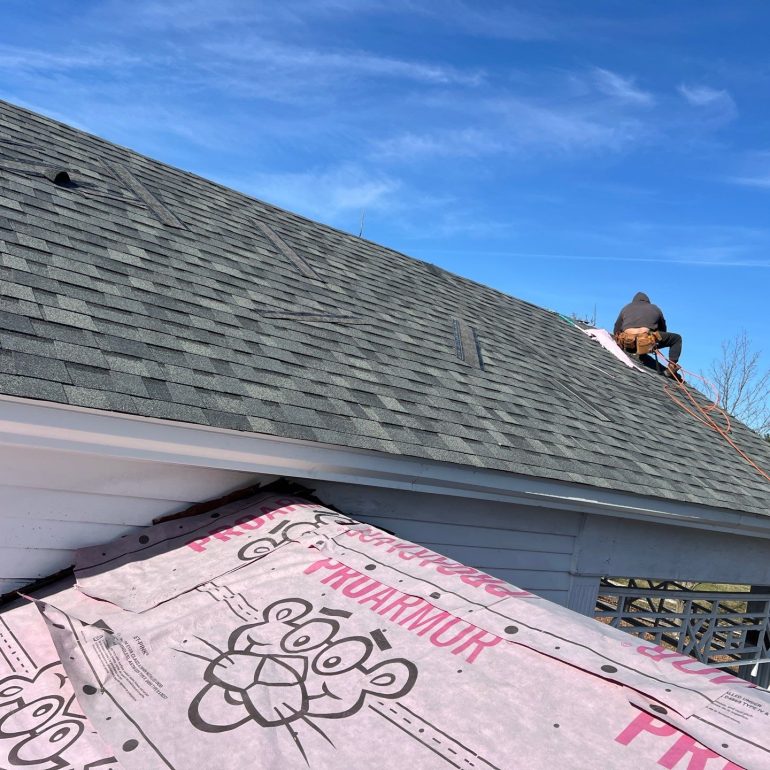

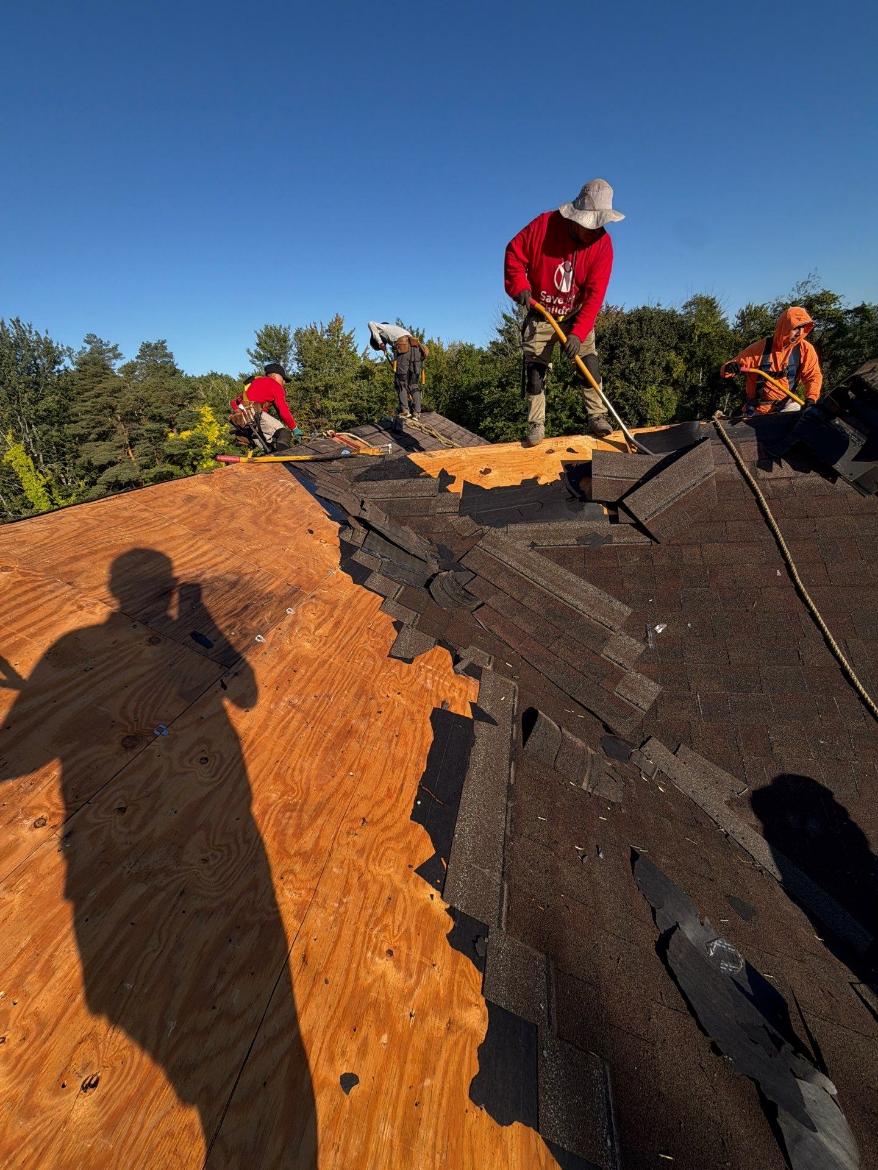
Removing old roofing shingles reveals parts of the roof that are normally hidden from view. The image shows a professional roofing crew actively removing aging asphalt shingles, with large sections of the plywood roof deck exposed underneath. This stage provides an important opportunity for a roof decking inspection after shingle tear-off because the condition of the underlying deck can influence how the new roofing system is installed. At Center Construction Roofing, evaluating the exposed roof surface helps identify areas that may require attention before new roofing materials are installed.
Why Roof Decking Inspection After Shingle Tear-Off Matters
Roof shingles protect the underlying structure from weather, but they can also conceal problems that are not obvious from the ground. Once the old shingles have been removed, roofers can visually examine the exposed decking.
The roof deck provides the structural surface to which roofing materials are attached. If sections have deteriorated, become damaged, or no longer provide a suitable surface, those areas may need to be addressed before installation continues.
This is one reason professional roof replacement involves more than simply placing new shingles over an existing roof. The condition of the layers underneath needs to be considered as part of the project.
What Roofers Look for on Exposed Roof Decking
During a roof decking inspection after shingle tear-off, roofing professionals can examine the exposed plywood or other decking material for visible signs of deterioration.
Areas that may receive additional attention include:
- Visible moisture-related deterioration
- Soft or compromised sections
- Damaged plywood
- Deteriorated edges
- Areas around roof penetrations
- Sections affected by previous leaks
- Improperly supported or damaged decking
The exact condition varies from roof to roof. Some projects may reveal relatively sound decking, while others may uncover localized areas that need additional work.
A professional assessment helps determine what should happen before the new roofing system is installed.
How Shingle Tear-Off Reveals Hidden Roof Problems
A roof can look relatively consistent from the ground while having localized problems underneath the shingles. Previous moisture exposure, aging materials, or other issues may not become apparent until the old roofing system has been removed.
The photograph illustrates why this stage is valuable. Large portions of the original roof deck are visible, allowing the roofing crew to examine the substrate directly rather than relying only on an exterior inspection.
This information can help inform the scope of Roof Replacement work and prevent unsuitable decking from being covered by a new roofing system.
Why Plywood Condition Can Affect New Roofing Installation
New shingles require an appropriate underlying surface. If portions of the decking are compromised, installing new roofing materials without addressing those areas may create problems with the overall roofing assembly.
The condition of the deck can also influence how securely roofing components are attached. For this reason, deck evaluation is an important part of preparing the roof for the next stage.
The image shows plywood exposed beneath removed shingles, making the condition of the substrate visible during the active roofing project. This is precisely the point at which professional evaluation can identify areas requiring attention.
How Roofers Evaluate Different Areas of the Roof
A roof is not always uniform across its entire surface. Different sections can experience different amounts of weather exposure, drainage, and previous moisture intrusion.
Roofers may therefore examine multiple areas rather than assuming that the condition of one section represents the entire roof.
Roof edges, valleys, penetrations, and areas around previous problem locations can receive particular attention because they can have different exposure and construction characteristics.
A thorough Roof Inspection during the replacement process can help establish a clearer understanding of the roof’s condition before the new materials are installed.
What Happens if Damaged Decking Is Found?
If the exposed decking contains areas that are not suitable for the new roofing system, the appropriate corrective work depends on the extent and nature of the problem.
Localized deterioration may require attention to specific sections rather than the entire roof deck. The final scope should be determined after the existing materials have been removed and the substrate can be properly evaluated.
Homeowners should also understand that discoveries made during tear-off can sometimes change the original project scope. This is why a professional roofing estimate may include provisions for concealed conditions that cannot be fully evaluated before the old roof is removed.
Why Professional Tear-Off Is More Than Shingle Removal
The crew shown in the image is performing more than a cosmetic change to the roof. Removing the old shingles creates access to the underlying roofing assembly and allows the condition of concealed components to be evaluated.
Professional crews also need to manage removed roofing materials while working across the roof surface. Proper organization of the tear-off stage helps prepare the property for the installation phase that follows.
At Center Construction Roofing, the transition from tear-off to installation can include evaluating the exposed substrate and determining whether additional preparation is necessary.
Preparing the Roof for New Materials
Once the existing roofing materials have been removed and the roof deck has been evaluated, the surface can be prepared for the next stage of the project.
Depending on the roofing system being installed, preparation may involve addressing unsuitable decking and ensuring the roof is ready for the required underlayment and other components.
The specific installation process depends on the roof design, materials selected, and condition of the existing structure. What remains consistent is the importance of beginning with a suitable substrate.
Why Homeowners Should Ask About the Roof Deck
When planning a roof replacement, homeowners often focus on shingle color, material, warranty, and project cost. The condition of the roof deck deserves attention as well.
A useful conversation with the roofing contractor can include questions about how the exposed decking will be evaluated after tear-off and how previously concealed damage will be handled if discovered.
Understanding this stage gives homeowners a clearer picture of what happens between removing the old shingles and installing the new roofing system.
Center Construction Roofing can help homeowners understand the condition of the existing roof and the preparation required for the next phase of the project.
FAQ
What is a roof decking inspection after shingle tear-off?
It is an evaluation of the exposed roof deck after the existing shingles have been removed. The inspection helps identify visible areas of deterioration, damage, or other conditions that may need attention before new roofing materials are installed.
Why can’t roof decking always be inspected before removing shingles?
Shingles and other roofing layers can conceal portions of the underlying deck. Removing the existing roofing materials provides direct visibility of the substrate.
Does every roof replacement require roof decking replacement?
No. The need for decking work depends on the actual condition of the exposed substrate. Some roofs may have areas that remain suitable for the new roofing system.
What can damage roof decking?
Moisture exposure, prolonged deterioration, previous leaks, and physical damage can affect roof decking. The specific cause depends on the property’s history and existing conditions.
Can new shingles be installed over damaged decking?
The condition of the substrate should be evaluated before new roofing materials are installed. Areas that are unsuitable may need to be addressed as part of the roofing project.
Why is shingle tear-off an important stage of roof replacement?
Tear-off removes the existing roofing materials and exposes the underlying layers. This allows roofing professionals to evaluate conditions that may not have been visible during an exterior inspection.