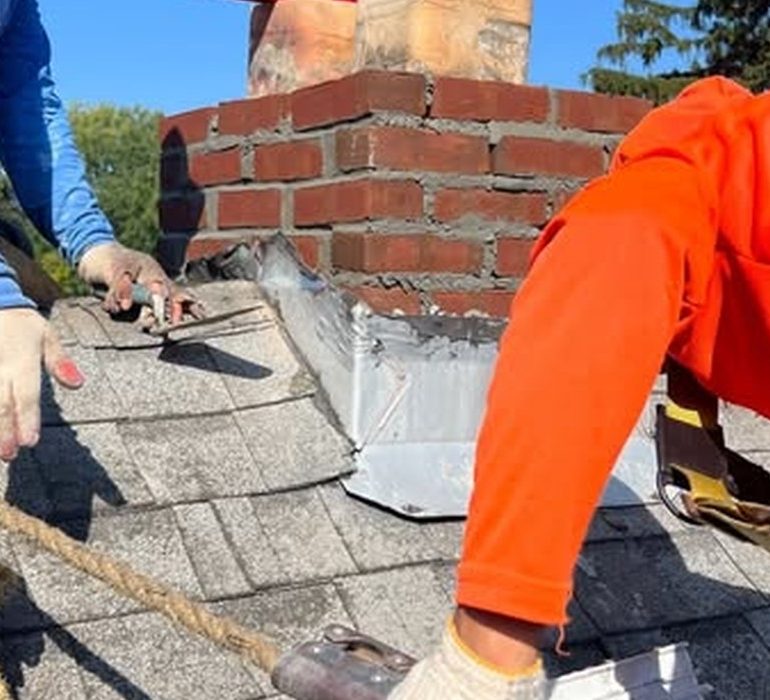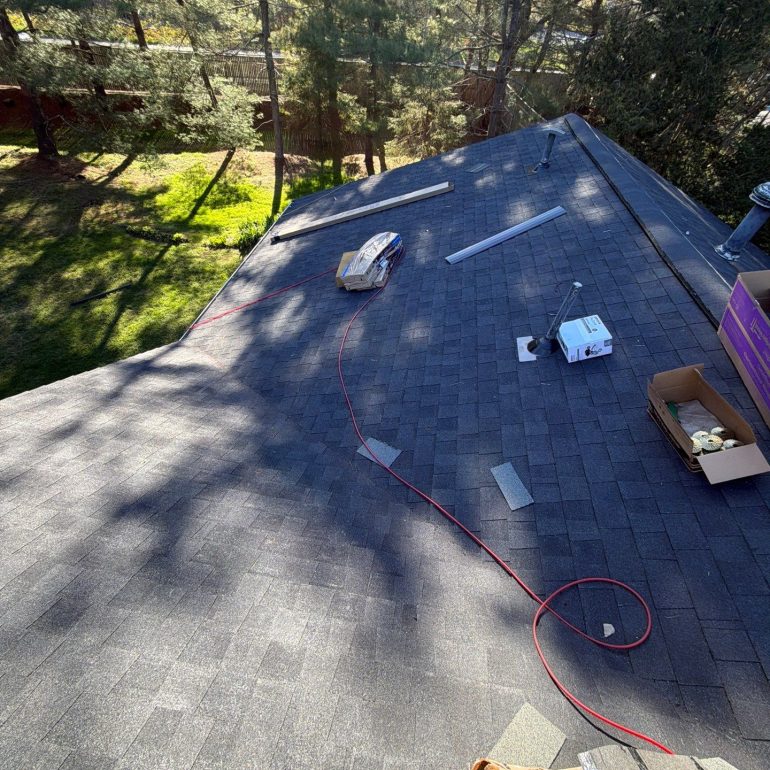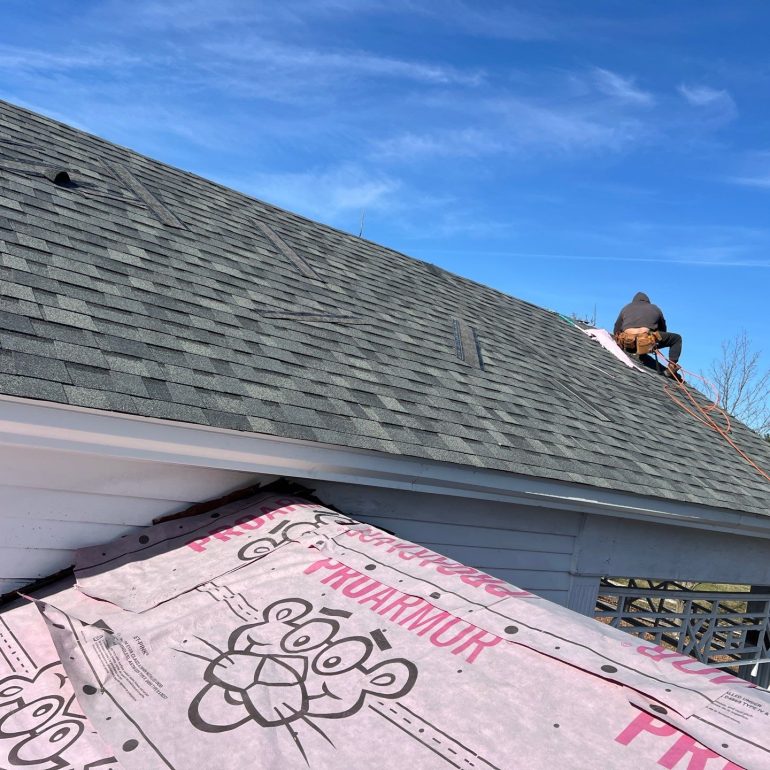


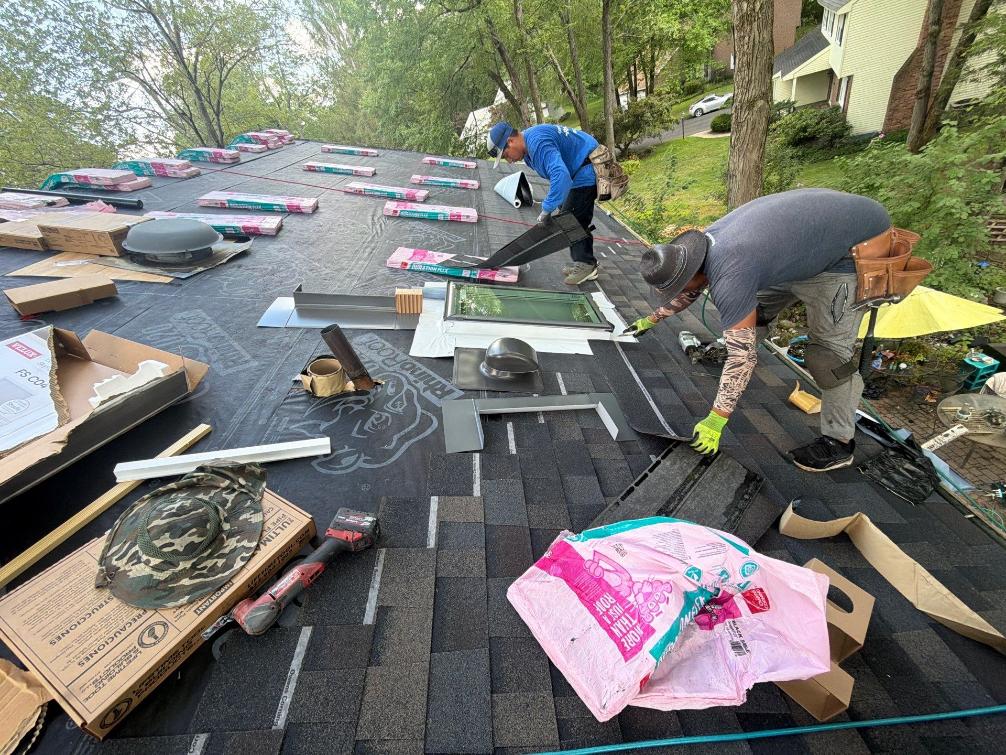
Replacing roof shingles is only one part of building a durable roofing system. One of the most important yet often overlooked components is asphalt shingle roof underlayment installation. As shown in this roofing project, the protective underlayment is installed before new shingles are applied, creating a critical moisture barrier that protects the roof deck from rain, wind-driven water, and ice buildup. At Center Construction Roofing, every Residential Roofing Service begins with proper preparation because long-lasting roofs start beneath the shingles.
Why Roof Underlayment Is Essential
Roof underlayment acts as the second line of defense against water infiltration. While asphalt shingles shed most rainwater, heavy storms, snow, and wind can force moisture beneath the shingles. Without quality underlayment, water can reach the wooden roof deck and eventually cause rot, mold, or structural damage.
Modern synthetic underlayment offers several advantages over traditional felt paper. It is lighter, stronger, more tear-resistant, and performs better during extreme weather conditions. This makes it a preferred option for today’s residential roofing projects.
The Roof Underlayment Installation Process
Proper installation requires more than simply rolling out a protective layer. Experienced roofing professionals carefully inspect the roof deck before any material is installed. Damaged plywood is replaced to ensure a solid foundation.
The process typically includes:
- Removing the existing roofing materials
- Inspecting roof decking
- Replacing damaged wood if necessary
- Installing synthetic roof underlayment
- Applying ice and water barriers in vulnerable areas
- Installing drip edge flashing
- Beginning asphalt shingle installation
Each step works together to create a roofing system designed for long-term durability.
Benefits of Synthetic Roof Underlayment
Synthetic underlayment has become the preferred choice for many homeowners because it provides superior protection throughout the roof’s lifespan.
Key benefits include:
- Better waterproof protection
- Increased tear resistance
- Improved UV exposure resistance
- Lightweight installation
- Enhanced worker safety
- Longer service life
- Better overall roof performance
When combined with professional Roof Replacement Services, synthetic underlayment helps extend the lifespan of asphalt shingles while reducing the risk of future leaks.
Common Installation Mistakes to Avoid
Improper installation can reduce the effectiveness of even the highest-quality materials.
Some of the most common mistakes include:
- Incorrect overlap between underlayment sheets
- Missing fasteners
- Damaged roof decking left unrepaired
- Improper sealing around roof penetrations
- Skipping ice and water shield installation
- Poor edge protection
Professional roofing contractors follow manufacturer specifications to avoid these issues and maximize warranty coverage.
How Underlayment Improves Roof Performance
Many homeowners only think about shingles when replacing a roof, but the hidden layers are equally important.
Quality underlayment helps:
- Prevent moisture intrusion
- Protect the roof deck
- Reduce future repair costs
- Improve overall roof durability
- Increase resistance to harsh weather
- Support proper attic ventilation
- Extend the life of asphalt shingles
When installed correctly by Roof Inspection and roofing professionals, the underlayment becomes one of the most valuable investments in the entire roofing system.
Why Choose Center Construction Roofing
At Center Construction Roofing, every roofing project follows proven installation practices using premium materials and experienced craftsmanship. Our team understands that durable roofs begin long before the first shingle is installed.
From deck inspection to synthetic underlayment and final shingle placement, we focus on every detail to provide homeowners with dependable, long-lasting roofing solutions that withstand changing weather conditions year after year.
FAQ
What is asphalt shingle roof underlayment?
Roof underlayment is a waterproof protective layer installed between the roof deck and asphalt shingles to provide additional leak protection.
Is synthetic underlayment better than felt paper?
Yes. Synthetic underlayment is generally stronger, lighter, more durable, and offers better moisture resistance than traditional felt paper.
Can roof underlayment be replaced without replacing shingles?
In most cases, no. Underlayment is installed beneath the shingles, so replacing it usually requires removing the existing roofing materials first.