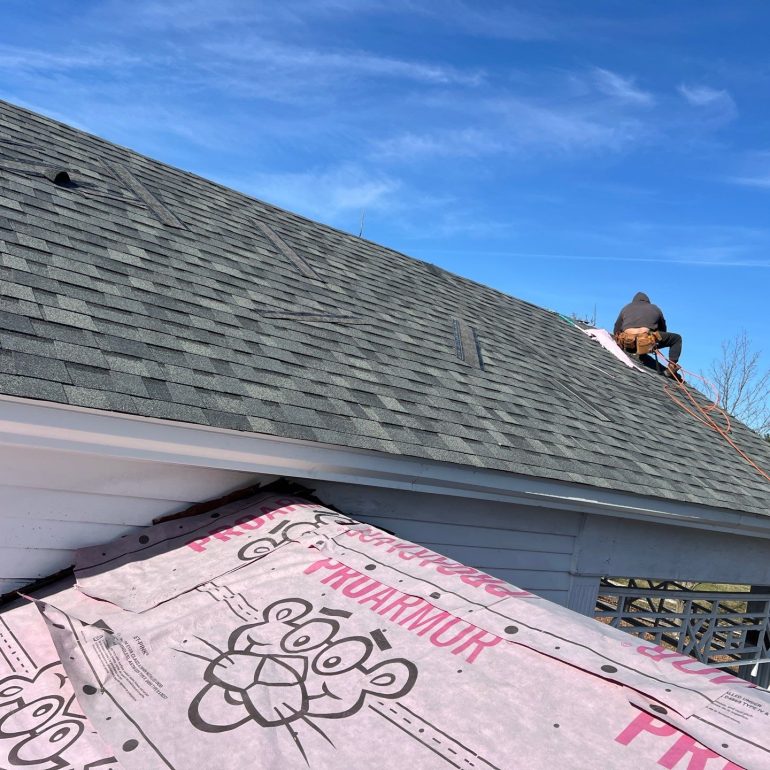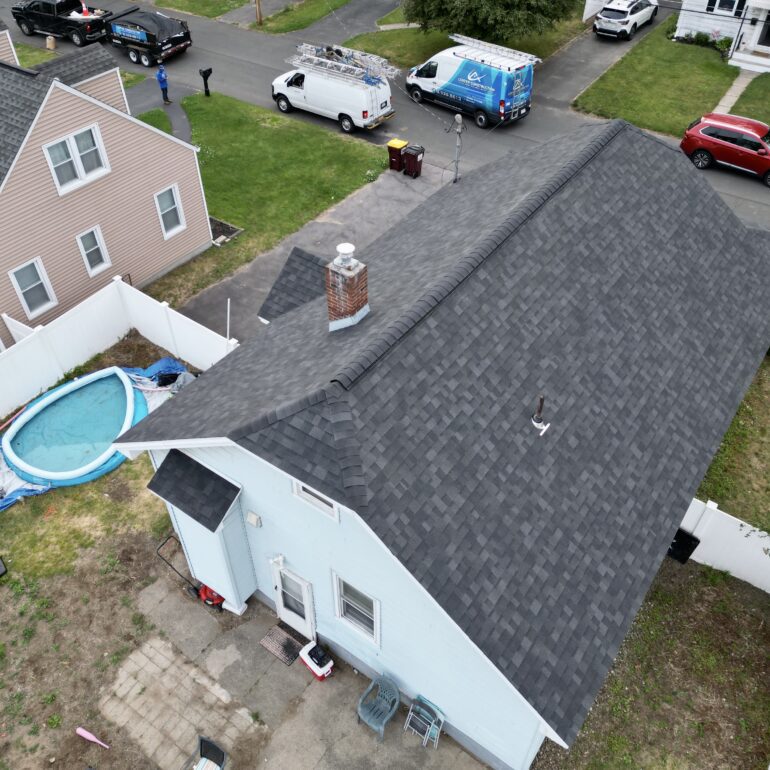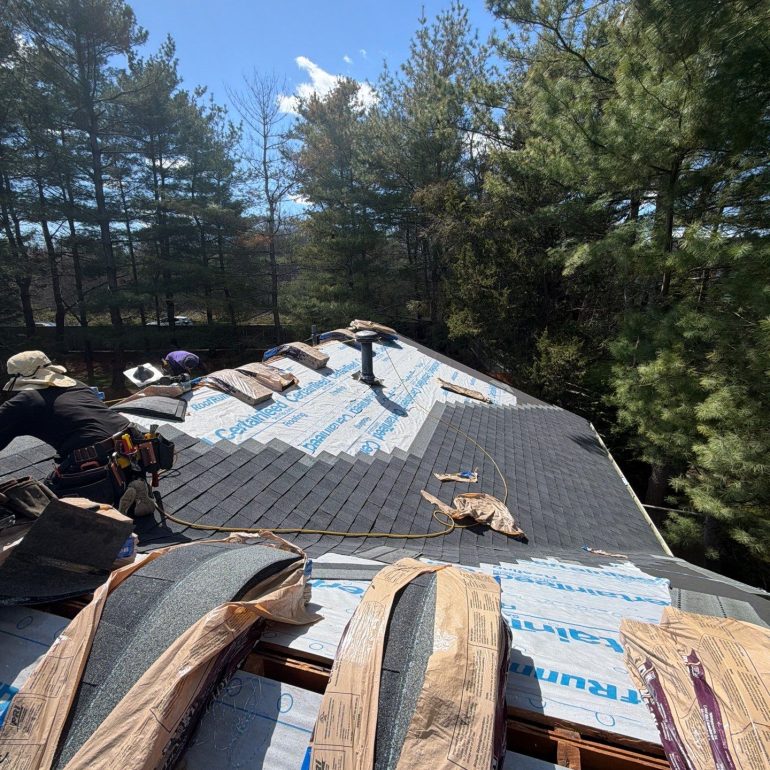

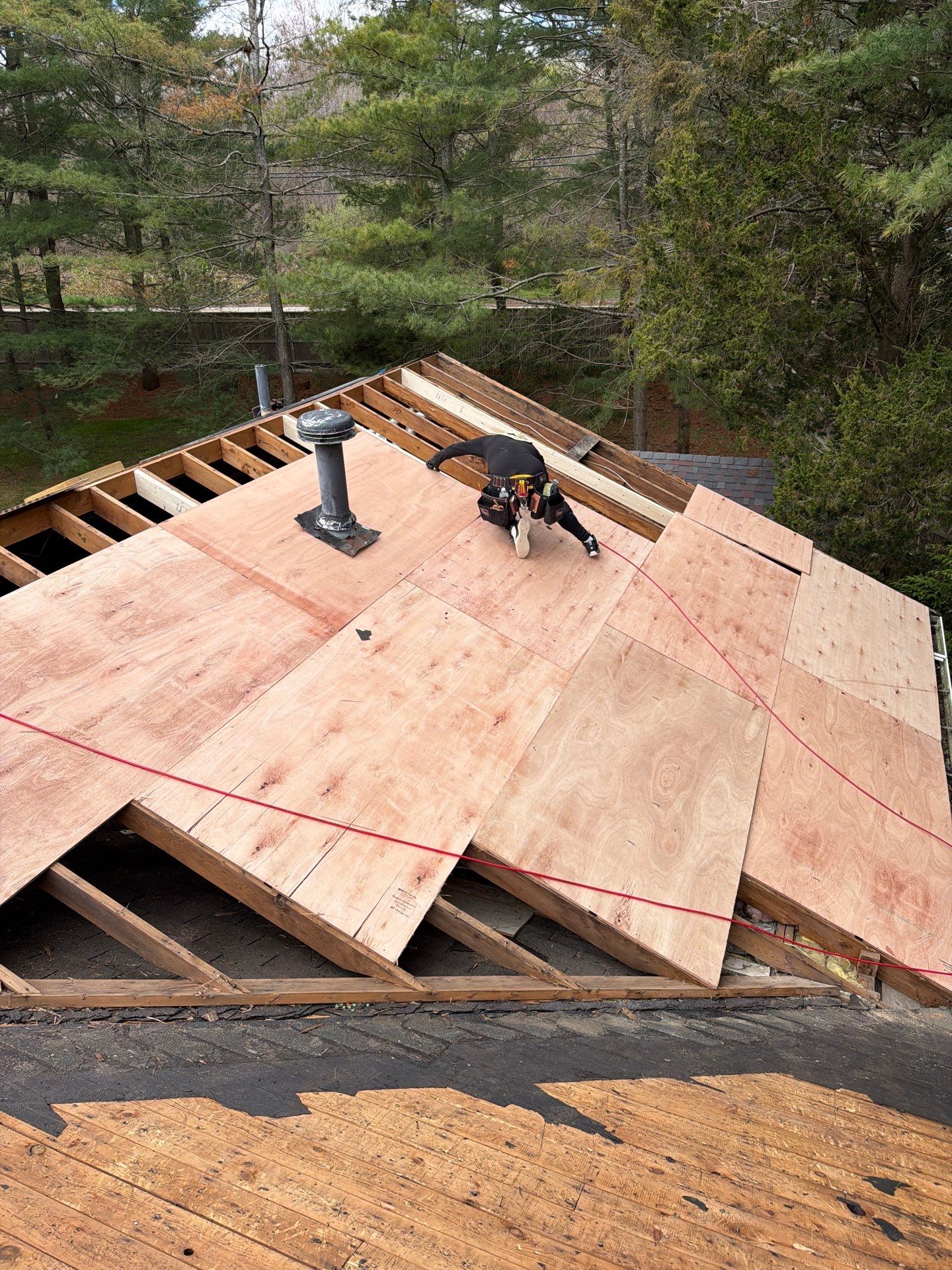
A successful roofing project starts long before new shingles are installed. The image above shows a roofing professional replacing roof decking with fresh plywood sheathing, an important step that helps create a stable foundation for a durable roofing system. When homeowners invest in a new roof, the condition of the underlying decking plays a major role in long-term performance, weather protection, and structural integrity.
For property owners considering a roof upgrade, understanding the importance of roof decking replacement can help prevent future problems and maximize the value of their investment.
Why Roof Decking Replacement Is Sometimes Necessary
Roof decking, also known as roof sheathing, is the structural layer attached to the roof framing. It serves as the base that supports roofing materials and helps distribute loads across the roof system.
Over time, decking can become damaged due to:
- Water intrusion from roof leaks
- Excess moisture and humidity
- Rot and wood deterioration
- Storm damage
- Aging roofing materials
When a roofing contractors removes old shingles, hidden damage beneath the surface often becomes visible. Soft spots, warped wood, or deteriorated sections of decking may no longer provide adequate support for a new roofing system.
In these situations, professional Roof Replacement projects often include replacing compromised decking to ensure the new roof performs as intended.
Signs Your Roof Sheathing May Need Replacement
Many homeowners are unaware of roof decking issues because the damage is concealed beneath roofing materials. However, there are several warning signs that may indicate underlying sheathing problems.
Common indicators include:
- Persistent roof leaks
- Sagging roof sections
- Water stains on ceilings
- Mold or mildew in the attic
- Visible wood rot
- Increased energy bills due to poor insulation performance
During a professional Roof Inspection, contractors evaluate both the exterior roofing materials and the structural components underneath. Identifying damaged decking early can prevent more extensive repairs and reduce the risk of future structural concerns.
The image demonstrates a roof in the middle of this process, where old materials have been removed and new plywood panels are being installed to restore the roof’s structural foundation.
Benefits of Installing New Plywood Roof Decking
Replacing damaged roof decking provides several important benefits that extend beyond structural support.
First, new plywood sheathing creates a smooth, stable surface for roofing materials. This allows shingles and underlayment to be installed correctly, improving overall roof performance.
Additional advantages include:
- Improved weather resistance
- Enhanced roof durability
- Better fastening strength for shingles
- Increased protection against wind uplift
- Reduced risk of future leaks
- Longer lifespan for the roofing system
A properly installed roof begins with a solid foundation. During a complete Residential Roofing Replacement, ensuring the decking is in excellent condition helps protect the investment and minimizes the likelihood of premature roofing failures.
The Roof Decking Replacement Process
Roof decking replacement is a precise process that requires experience, proper materials, and attention to detail.
The project typically begins with the removal of existing roofing materials. Once the old roof is stripped down, contractors inspect the decking for signs of damage or deterioration.
Damaged sections are removed and replaced with new plywood panels that meet local building code requirements. The panels are securely fastened to the roof framing, creating a strong and uniform surface.
After the decking installation is complete, roofing professionals proceed with:
- Underlayment installation
- Flashing replacement
- Ventilation upgrades if needed
- Shingle or roofing material installation
- Final quality inspections
The image clearly illustrates this critical stage, where new plywood sheets are being carefully positioned and secured before the roofing system is completed.
Working with an experienced contractor ensures every layer of the roof is installed correctly, helping homeowners achieve maximum protection and long-term value.
Protecting Your Home with a Strong Roofing Foundation
While shingles often receive the most attention during roofing projects, the underlying decking is equally important. A roof is only as strong as the structure supporting it.
Replacing damaged plywood sheathing helps maintain the integrity of the entire roofing system while improving resistance to moisture, weather, and structural stress. Whether addressing storm damage, aging materials, or hidden water intrusion, roof decking replacement provides a critical foundation for lasting performance.
For homeowners planning a roofing project, a thorough inspection and evaluation of the decking can help ensure the new roof delivers reliable protection for years to come.
FAQ
What is roof decking?
Roof decking, also called roof sheathing, is the layer of wood panels attached to roof rafters or trusses. It provides the foundation for roofing materials such as underlayment and shingles.
How do roofing contractors determine if decking needs replacement?
During a Roof Inspection, contractors look for signs of rot, moisture damage, sagging, soft spots, and structural deterioration. Any compromised sections are typically replaced before new roofing materials are installed.
Can a new roof be installed over damaged decking?
Installing a new roof over damaged decking is not recommended. Compromised sheathing can lead to structural issues, reduced roofing performance, and future leaks. Replacing damaged decking helps ensure a safe and long-lasting roofing system.