

A properly installed asphalt shingle roof with professionally integrated skylights provides lasting protection against the elements while maintaining the home’s natural lighting. One of the most important parts of this process is skylight roof flashing replacement, which creates a watertight seal around the skylight to prevent leaks and moisture damage. Whether you’re replacing an aging roof or addressing recurring water intrusion, installing new flashing correctly helps protect both your roofing system and your investment for years to come.
Why Skylight Flashing Matters During a Roof Replacement
Skylights bring natural light into a home, but they also require careful waterproofing. The flashing system surrounding the skylight directs water away from the opening and onto the shingles, preventing moisture from entering the roof deck.
When homeowners invest in Roof Replacement, replacing or upgrading the flashing should be part of the project whenever possible. Reusing old flashing can increase the risk of future leaks, especially if the existing metal has deteriorated or was installed incorrectly.
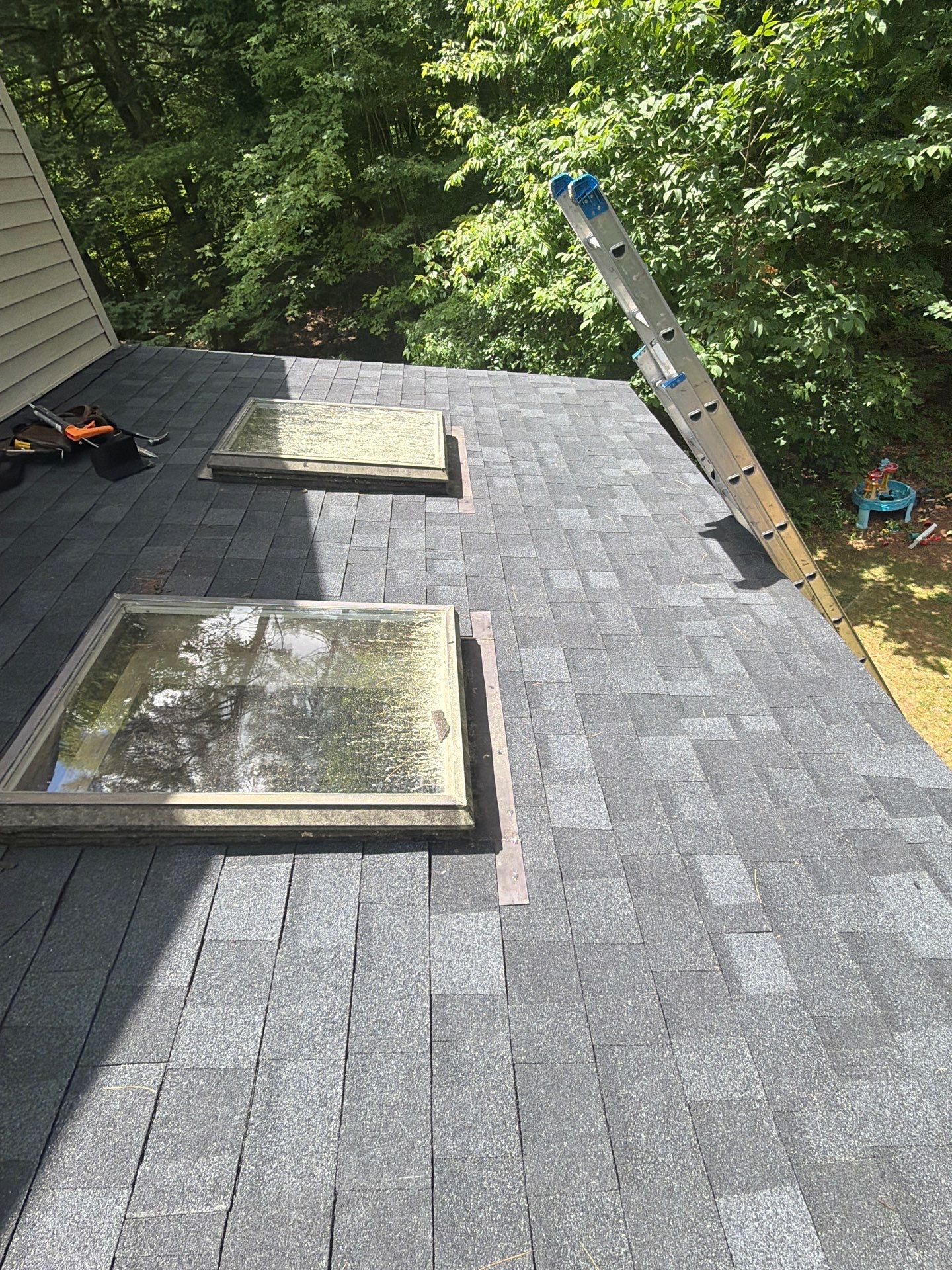
The image demonstrates a clean, professional installation where the asphalt shingles have been carefully fitted around the skylights, creating an even appearance while maintaining proper water management.
Benefits of New Asphalt Shingle Roofing Around Skylights
Modern architectural asphalt shingles provide long-lasting protection, but their performance depends on quality installation around roof penetrations such as skylights.
A properly completed Roofing Services project offers several benefits:
- Improved leak protection around skylight openings
- Better resistance to wind-driven rain
- Enhanced roof durability
- Cleaner appearance with properly integrated flashing
- Reduced maintenance over the life of the roof
Professional installers follow manufacturer guidelines to ensure shingles overlap correctly and flashing components work together as a complete water-shedding system.
Signs Your Skylight Flashing May Need Attention
Many homeowners assume the skylight itself is leaking when water appears inside. In reality, worn flashing or improper installation is often the cause.
Common warning signs include:
- Water stains on ceilings near the skylight
- Damp drywall after heavy rain
- Missing or damaged shingles around the skylight
- Rusted or separated flashing
- Previous roofing repairs that failed to stop leaks
If any of these issues are present, scheduling a professional Roof Inspection can help determine whether flashing replacement or additional repairs are needed before more extensive water damage occurs.
Professional Installation Makes the Difference
Skylight installations require precision because multiple roofing materials must work together. Every layer—from the underlayment to the flashing and shingles—plays a role in keeping water outside where it belongs.
The roof shown in the image illustrates careful workmanship with consistent shingle alignment and properly integrated skylights. Attention to these details helps extend the life of the roofing system while maintaining a finished appearance.
When replacing a roof, homeowners should also ask whether the contractor will inspect the skylight condition, replace aging flashing, and verify that all surrounding materials meet current installation standards. Addressing these details during a roof replacement is often more cost-effective than returning later to repair leaks.
A quality roofing project doesn’t simply involve installing new shingles—it includes evaluating every component that could affect long-term performance. Skylights, plumbing vents, valleys, and chimneys all require specialized flashing techniques to ensure reliable protection for years to come.
FAQ
Should skylight flashing always be replaced with a new roof?
In many cases, yes. Replacing skylight flashing during a roof replacement provides better long-term protection and reduces the risk of leaks caused by aging or damaged materials.
Can old skylights stay when installing a new roof?
If the skylights are in good condition, they can often remain in place while new flashing is installed. Older skylights nearing the end of their lifespan may be worth replacing at the same time to avoid future labor costs.
How can I tell if my skylight is leaking or if it’s the flashing?
Water stains around the skylight, leaks during heavy rain, or moisture appearing near the surrounding drywall often indicate flashing issues rather than a failed skylight. A professional roof inspection can identify the exact source of the leak.