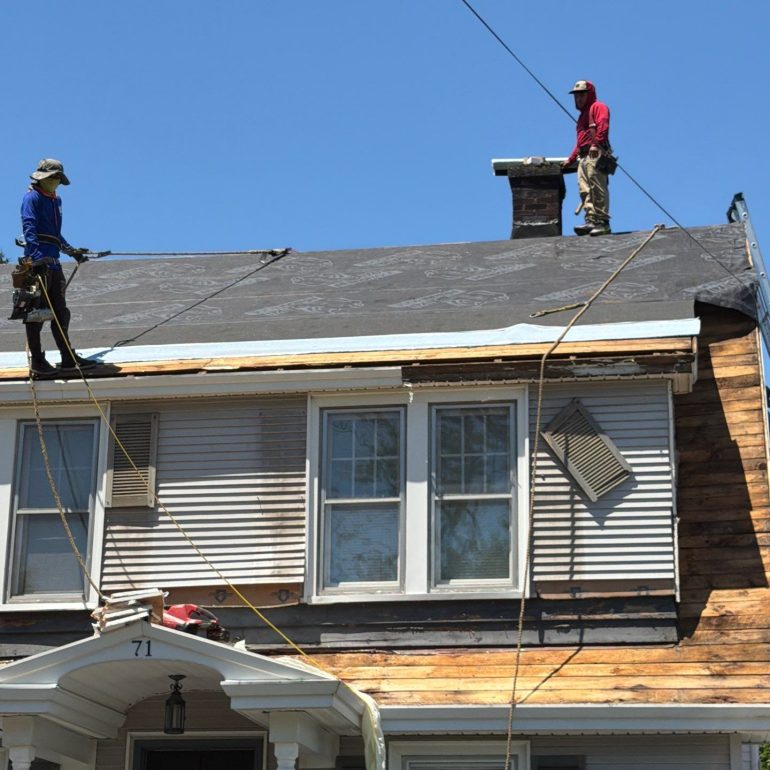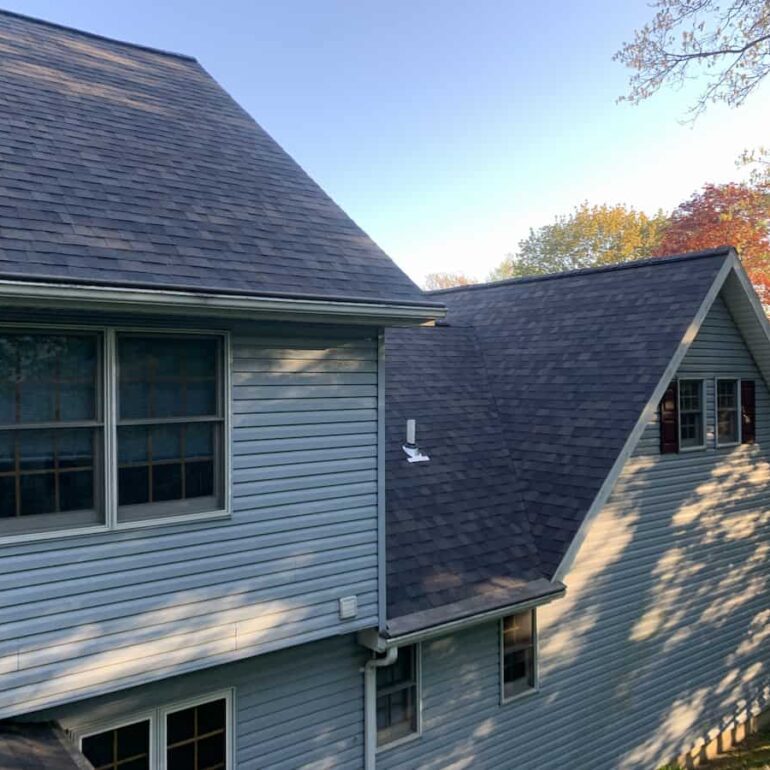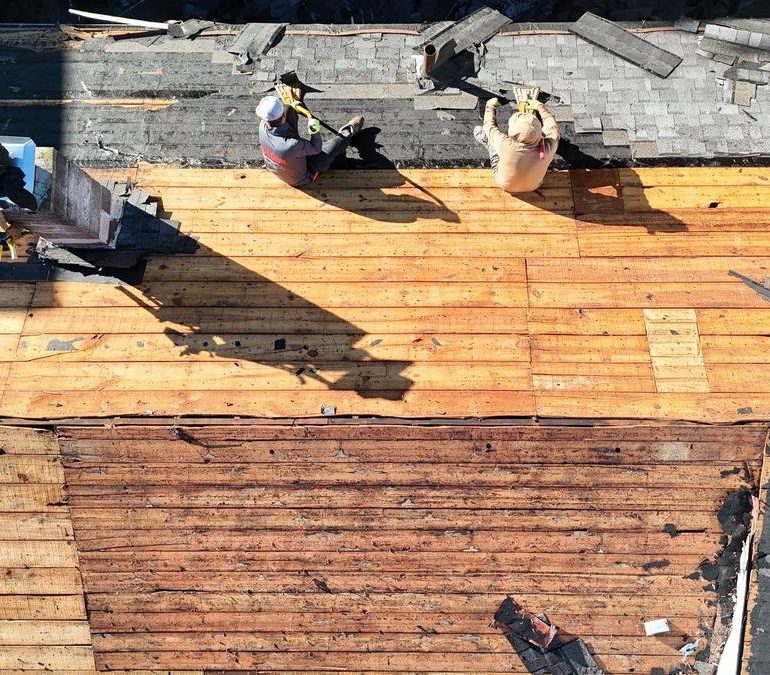

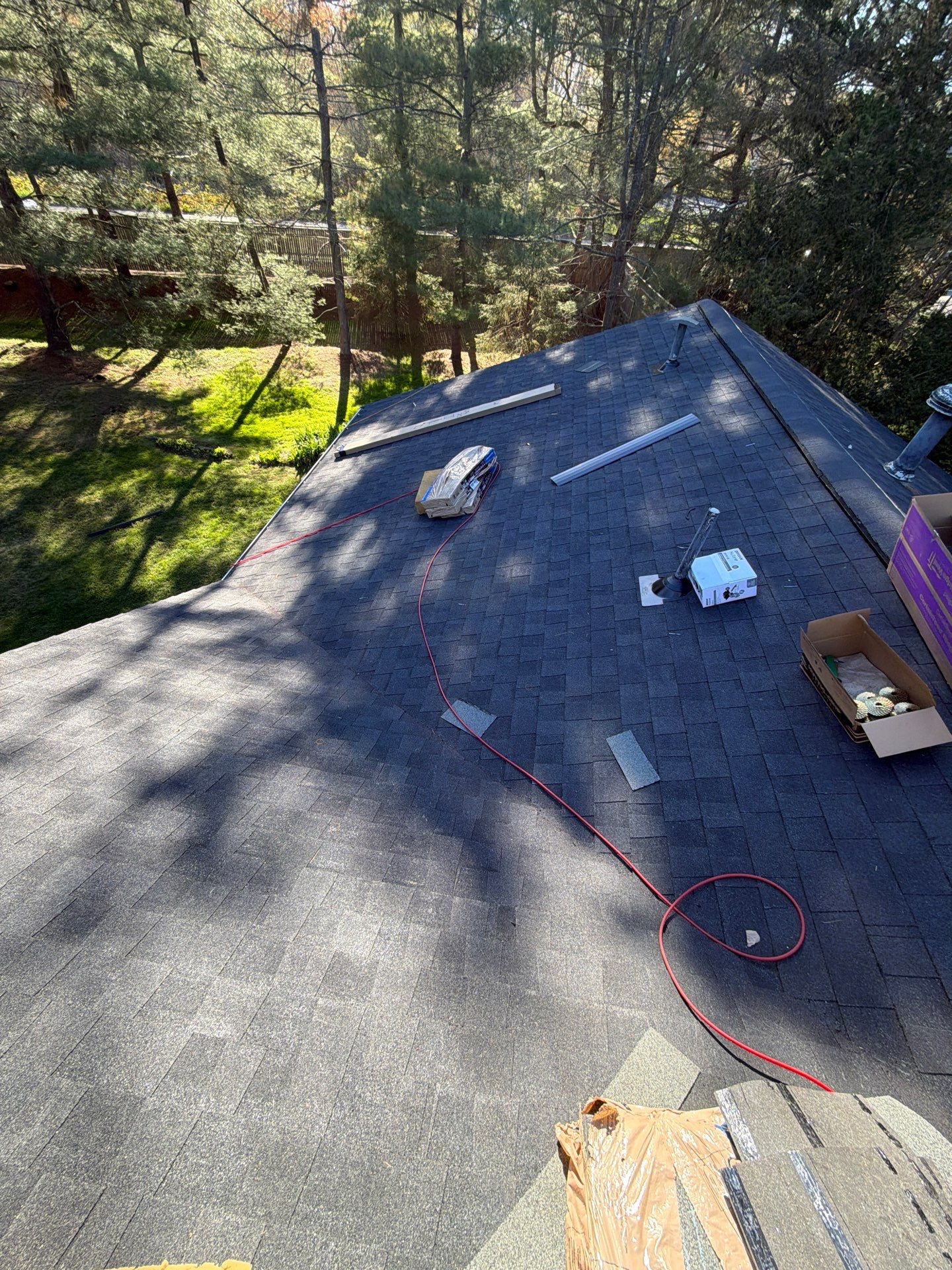
A properly ventilated roofing system plays a critical role in protecting a home’s structure, improving energy efficiency, and extending roof lifespan. The image shows an asphalt shingle roof during the installation of new roof ventilation components. Roofing materials, vent assemblies, flashing components, and installation tools are visible, indicating active work focused on improving airflow through the roof system.
For homeowners, roof ventilation is often overlooked until moisture problems, excessive attic heat, or roofing deterioration become noticeable. A professionally completed Roof Vent Installation helps maintain balanced airflow, allowing warm, moist air to escape while supporting the overall performance of the roofing system.
Why Asphalt Shingle Roof Vent Installation Matters
An asphalt shingle roof is designed to function as a complete system. While shingles provide weather protection, ventilation components help regulate temperature and moisture beneath the roof deck.
Without adequate airflow, heat can become trapped in attic spaces during warmer months. Excess moisture can also accumulate, potentially leading to mold growth, wood deterioration, and insulation damage. Proper Roof Ventilation Improvements allow air to circulate more effectively, helping to reduce these risks.
The image illustrates a residential roofing project where vent components are being integrated into an existing asphalt shingle roof. The visible vent pipes and roofing materials suggest attention to both functionality and weather resistance, which are essential for long-term roof performance.
In many homes, upgrading ventilation can be a valuable addition during a larger Roof Replacement or as part of targeted roofing maintenance.
Key Components of a Roof Vent Installation
Successful Roof Vent Installation involves more than simply adding a vent opening. Several components must work together to ensure proper performance and weather protection.
Roof vents are designed to create pathways for air movement through the attic or roof cavity. Depending on the home’s design, different vent styles may be used to support balanced airflow.
Flashing is another critical element. Proper Roof Vent Flashing Installation helps create a watertight seal around roof penetrations, preventing leaks and moisture intrusion. The image shows vent assemblies positioned on the roof surface, highlighting the importance of integrating flashing with the surrounding shingles.
Asphalt shingles surrounding the vent must be carefully fitted and sealed to maintain the roof’s protective barrier. Precision during installation helps ensure that the vent system performs effectively without compromising the roof’s weather resistance.
Professional roofing contractors typically inspect existing ventilation conditions before determining the best placement and type of vent components for the property.
Benefits of Upgrading Residential Roof Ventilation
Modern ventilation systems provide several advantages for homeowners seeking to improve roofing performance.
One of the primary benefits is temperature regulation. Proper attic airflow helps reduce excessive heat buildup, which can place stress on roofing materials over time. By improving air circulation, a well-designed Residential Roofing Vent Upgrade can contribute to more stable indoor temperatures.
Moisture management is another important benefit. Excess humidity trapped beneath the roof can create conditions that encourage mold growth and wood rot. Improved ventilation helps reduce moisture accumulation and supports healthier attic conditions.
Enhanced roof longevity is also a significant consideration. Asphalt shingles perform best when temperature and moisture levels remain within acceptable ranges. A properly ventilated roofing system can help preserve shingle integrity and reduce premature wear.
Additionally, ventilation improvements may support energy efficiency by reducing strain on cooling systems during warmer seasons.
Professional Installation for Long-Term Performance
Roof penetrations require careful attention to detail. Every vent opening must be properly sealed, flashed, and integrated into the existing roofing system.
A professional Roof Vent Replacement or new vent installation begins with evaluating attic conditions, airflow requirements, and roof configuration. Contractors determine optimal vent placement while ensuring compliance with manufacturer recommendations and local building requirements.
The image reflects a work-in-progress installation on a residential asphalt shingle roof. Roofing materials are staged nearby, and vent components are positioned for integration into the roofing system. This process helps ensure that each element functions as part of a complete, weather-resistant assembly.
Quality workmanship is especially important when working with roof penetrations because improper installation can increase the risk of leaks and future repairs. Experienced roofing professionals use proven techniques to maintain both ventilation performance and roof protection.
FAQ
How do I know if my roof needs additional ventilation?
Common signs include excessive attic heat, moisture buildup, mold growth, ice dam formation in colder climates, and premature shingle deterioration. A professional roofing inspection can help determine whether ventilation improvements are needed.
Can roof vents be added to an existing asphalt shingle roof?
Yes. In many cases, Roof Vent Installation can be performed on existing asphalt shingle roofs. Roofing contractors evaluate the roof structure and ventilation needs before recommending the appropriate solution.
Does roof vent installation help extend roof life?
Proper ventilation helps regulate attic temperatures and moisture levels, reducing stress on roofing materials. When combined with routine maintenance, effective ventilation can contribute to improved roof longevity and overall system performance.